

Shell companies are often portrayed as mysterious businesses with hidden owners, no employees and money moving through complicated international structures. In reality, the term covers several different corporate situations, and the existence of a shell company does not automatically indicate illegal activity.
In the UK, the Financial Conduct Authority (FCA) has a specific definition for listed shell companies. Under its current Listing Rules, a shell company can be an issuer whose assets consist solely or predominantly of cash or short-dated securities, or whose main purpose is to undertake an acquisition or merger.
Other shell-like corporate structures may hold assets, remain dormant, wait for acquisition opportunities or form part of larger corporate groups.
At the same time, shell companies can be misused to conceal beneficial ownership, move criminal proceeds or obscure financial transactions. This is one reason UK company transparency rules have become considerably stronger.
Here are 10 shell company examples and structures worth understanding in the UK in 2026, followed by practical guidance on how to investigate them.
Top 10 Shell Companies and Structures in the UK
The important distinction is that these examples do not all carry the same legal meaning. Some fall within specific regulatory definitions, while others simply demonstrate characteristics commonly associated with shell companies.
1. BHUR Ltd
BHUR Ltd provides an example where the description of a shell company comes from a UK enforcement authority rather than being inferred from Companies House information.
The Serious Fraud Office reported in March 2025 that it had recovered money from two shell companies as part of its work connected with the RBG Resources case. BHUR Ltd was one of the companies identified.
This matters because simply finding a business with no obvious employees, a shared registered address or limited accounts is not sufficient evidence to publicly describe it as an illicit shell company.
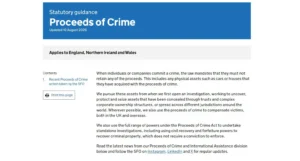
A documented enforcement case provides a much stronger basis.
For readers researching shell companies, BHUR Ltd therefore demonstrates the importance of distinguishing between a company that merely has shell-like characteristics and one specifically identified as such by an investigating authority.
2. Mansa Corp Ltd
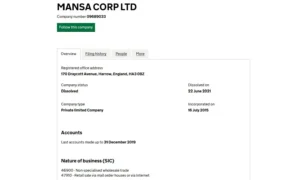
Mansa Corp Ltd was the other company identified in the same Serious Fraud Office recovery.
According to the SFO’s reporting, money connected with the case had moved through companies in an effort to disguise its origins.
This illustrates one of the principal financial-crime concerns surrounding shell companies.
A company provides a separate legal identity. If funds move through several corporate entities, particularly across different jurisdictions, identifying where the money originally came from and who ultimately controls it can become more complicated.
That does not mean corporate layering is inherently unlawful. Large businesses routinely operate through subsidiaries and holding companies.
The critical difference is the purpose of the structure and the transactions passing through it.
3. Listed Acquisition Shell Companies
Not every shell company is an obscure private company.
The FCA has an entire listing category dealing with equity shares in shell companies.
Under the current UK Listing Rules, one definition covers an issuer whose predominant purpose or objective is undertaking an acquisition or merger, or a series of acquisitions or mergers.
These entities can therefore exist primarily to find and acquire another business.
Before completing the transaction, the shell company may have relatively little conventional operating activity of its own.
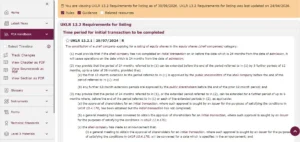
The FCA’s rules also place requirements around the initial transaction. For example, the constitution of a shell company applying for this listing category generally has to provide for a 24-month period in which to complete an initial transaction, subject to specified extension arrangements.
This is a particularly useful example because it demonstrates that “shell company” is itself a recognised term within UK financial regulation.
4. Cash Shell Companies
Cash shell companies form another category expressly covered by the FCA definition.
The UK Listing Rules define a shell company to include an issuer whose assets consist solely or predominantly of cash or short-dated securities.
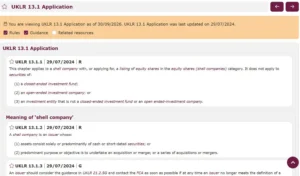
Such a company can therefore have substantial financial resources while having comparatively little conventional business activity.
This challenges a common misconception that shell companies must be worthless companies with no assets.
A shell company could potentially hold millions of pounds while employing very few people and selling no conventional products or services.
The important question is therefore not simply:
Does this company have money?
Instead, investors and researchers need to understand why the company holds that money and what it intends to do with it.
5. SPAC-Style Shell Company Structures
Special purpose acquisition companies, commonly known as SPACs, provide another useful way to understand acquisition-focused shell structures.
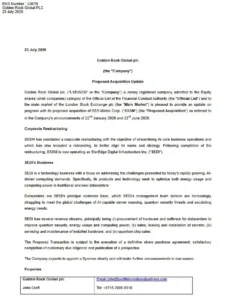
Rather than beginning with an established operating business, an acquisition vehicle can raise capital and then look for a business or assets to acquire.
The FCA’s current shell-company framework specifically covers issuers whose predominant purpose is undertaking acquisitions or mergers.
The FCA also defines an initial transaction broadly enough to include acquiring all or part of a business, company or assets, entering certain financing arrangements, or entering a joint venture.
Once an acquisition has been completed, the nature of the business can fundamentally change.
This illustrates why shell-company status is not necessarily permanent.
6. Asset-Holding Shell Structures
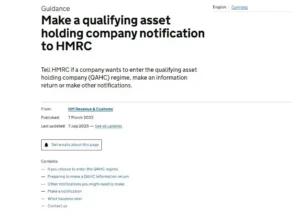
Some companies exist primarily to hold particular assets or investments.
Imagine a corporate group that establishes a separate limited company to hold one valuable asset.
That company might have no customers, sales team or conventional trading premises. Its function could simply be to hold the asset separately from other parts of the group.
Such structures can resemble shell companies because they have little operational activity.
However, having limited operations does not automatically indicate wrongdoing.
Asset separation can have legitimate commercial, investment, financing and risk-management purposes.
When examining this type of structure, the useful questions concern ownership, assets, transactions and commercial purpose rather than employee numbers alone.
7. Property-Holding Corporate Structures
Property provides another area where companies with limited operational activity can appear.
A company may exist primarily to own a particular building or portfolio rather than sell goods and services to customers.
This is particularly relevant to London because UK property has historically attracted domestic and international corporate ownership.
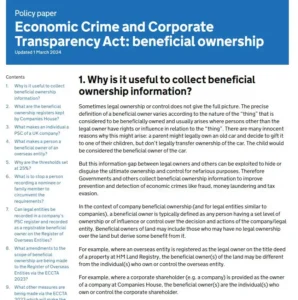
Special transparency requirements now apply to overseas entities owning certain UK property.
The Register of Overseas Entities came into force on 1 August 2022. Overseas entities seeking to buy, sell or transfer relevant UK property or land generally need to register with Companies House and provide information about their registrable beneficial owners or managing officers.
The regime also applies retrospectively in specified circumstances, including overseas entities that acquired property or land in England and Wales on or after 1 January 1999.
This makes beneficial ownership particularly important when researching corporate property ownership in London.
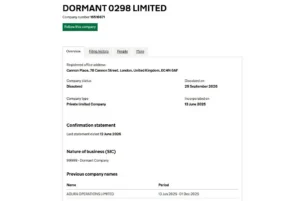
8. Dormant Companies
Dormant companies frequently become confused with shell companies, but the terms should not automatically be used interchangeably.
A dormant company has a more specific accounting meaning.
Typically, it has had no significant accounting transactions during the relevant accounting period, subject to particular exceptions.
There are perfectly ordinary reasons for keeping a company dormant.
Someone might incorporate a company before being ready to start trading. An existing business might stop trading temporarily, or a company name might be retained for future use.
A dormant company can therefore have many characteristics people associate with shell companies such as no employees, customers or meaningful revenue without necessarily being what regulators or investigators would describe as a shell company.
This distinction makes dormant-company records useful for research but unsuitable as automatic evidence that a company is a shell.
9. Shelf Companies
A shelf company is normally incorporated and then kept inactive until somebody buys it.
The company effectively sits “on the shelf.”
After acquisition, new owners may change its directors, shareholders, business activity, registered office or company name as appropriate.
Shelf companies are interesting in the context of shell companies because, before being sold, they can have many similar characteristics: little or no trading activity, few assets and no conventional operating business.
However, shelf company is the more accurate description where that is the entity’s known purpose.
One particularly important point for business research is that an old incorporation date does not necessarily equal an old operating business.
For example, a company incorporated several years earlier and kept dormant on a shelf does not automatically have several years of customers, revenue, contracts or commercial trading history.
10. Overseas Shell Structures Connected With UK Assets
The final category involves corporate structures that extend beyond the UK.
Imagine:
Individual → Overseas Company A → Overseas Company B → UK Asset
The immediate owner of the asset is a company rather than the individual at the top of the structure.
Adding further corporate layers or different jurisdictions can make beneficial ownership harder to establish.
There are legitimate reasons for multinational ownership structures. However, opacity can also create financial-crime risks.
The UK’s Register of Overseas Entities addresses part of this problem for relevant property ownership by requiring overseas entities to disclose information about registrable beneficial owners or managing officers to Companies House.
This makes overseas corporate structures particularly relevant to discussions about shell companies and London property.
What Exactly Is a Shell Company?
There is no single definition that should be applied indiscriminately to every UK company.
Context matters.
For UK-listed shell companies, the FCA’s current definition is particularly clear. An issuer falls within the relevant definition where its assets consist solely or predominantly of cash or short-dated securities, or its predominant purpose is to undertake an acquisition or merger, or a series of them.
Elsewhere, “shell company” is often used more broadly for an incorporated entity with little or no substantial operational business.
A shell company might nevertheless have:
- directors and shareholders;
- a Companies House registration;
- a registered office;
- investments or other assets;
- contractual rights; and
- bank accounts.
Having those features does not necessarily mean it operates like a conventional trading business.
Are Shell Companies Legal in the UK?
A shell structure is not inherently unlawful.
Indeed, the existence of specific FCA rules governing listed shell companies clearly demonstrates that shell-company structures can exist within the regulated UK financial system.
Problems arise when corporate entities are used for unlawful purposes.
For example, companies can potentially be misused to conceal criminal proceeds, hide beneficial ownership, evade sanctions or facilitate fraud.
This is why it is important to distinguish between the legal structure and how that structure is being used.
An acquisition vehicle seeking a legitimate business to purchase and a company deliberately moving criminal proceeds through multiple entities might both be described as shell companies in particular contexts, but their purposes are fundamentally different.
Shell Companies vs Shelf Companies vs Dormant Companies
The difference can be summarised simply:
The distinction matters because using the wrong term can give readers a misleading impression about a perfectly legitimate company.
What Did Companies.London Find About Shell Companies in 2026?
Our review of the current UK regulatory framework reveals an important point that is often missing from online lists of shell companies:
There is no simple Companies House “shell company” label that can reliably identify every shell company in the UK.
That means searching Companies House for companies with no employees, dormant accounts or particular SIC codes and publishing them as “shell companies” would be misleading.
Instead, researchers should combine multiple pieces of information.
The result is more useful than simply asking whether a company “looks like a shell.”
What Changed for Shell Companies in 2026?
The biggest recent development is mandatory Companies House identity verification.
The legal requirement began on 18 November 2025.
New directors have been required to verify their identity to incorporate a company or be appointed to an existing company. Existing directors entered a 12-month transition process tied to their next annual confirmation statement, while PSCs have their own verification timetable.
Companies House estimated that approximately 6 to 7 million people would need to verify their identities by mid-November 2026.
This is highly relevant to shell companies because establishing who is actually setting up, running and controlling a company is central to corporate transparency.
How Does Companies House Identity Verification Work?
People can verify directly through Companies House using GOV.UK One Login or through an Authorised Corporate Service Provider (ACSP).
Companies House states that the legal requirement began on 18 November 2025 rather than that date being a universal deadline. Instead, it started a 12-month transition period during which directors and PSCs must comply by their applicable due dates.
This distinction is important in 2026 because not everybody covered by the transition period has exactly the same deadline.
For people researching corporate structures, verified identity information adds another piece of evidence to consider alongside directors, PSCs, accounts and filing histories.
How Can Shell Companies Hide Their Real Owners?
One company owning another can create layers between an asset and the individual ultimately benefiting from it.
Consider:
Person → Holding Company → Company B → Company C → Property
Looking only at Company C might reveal another company as its immediate owner.
The researcher then has to follow the ownership chain through Company B and the holding company to identify the individual at the top.
Where all entities are UK companies with transparent filings, that process may be relatively straightforward.
Where several jurisdictions and different disclosure regimes are involved, it can become considerably more complicated.
This is one reason beneficial-ownership rules and PSC information are important.
How Can You Check a Possible Shell Company?
Start with the Companies House register rather than relying on the company’s own website.
Check whether its claimed history matches its incorporation date and filings.
Then examine its accounts, officers, PSC information, registered office and previous names.
For example, a company claiming to have traded successfully for 15 years deserves further investigation if it was incorporated only six months ago.
Likewise, an impressive London registered-office address does not necessarily mean the company has employees or operating premises there. Registered-office services are legitimate and widely used.
The objective is not to find one “red flag.” It is to determine whether the overall story is consistent.
10 Signs That a Company May Need Further Investigation
No individual characteristic proves that a company is an illicit shell, but additional checks may be sensible where several unexplained features appear together:
- There is little evidence of genuine commercial activity.
- The beneficial owner is difficult to establish.
- The company’s claimed history conflicts with Companies House records.
- Several unexplained corporate layers separate the business from its owners.
- Its stated activities do not appear to match its transactions.
- Directors change frequently without an obvious explanation.
- Large payments are requested through apparently unrelated companies.
- The business claims substantial operations but has little supporting evidence.
- Its ownership structure spans several jurisdictions without a clear commercial reason.
- Important information supplied by the business conflicts with independent records.
These are reasons to investigate further, not evidence of criminal conduct by themselves.
Can Shell Companies Own Property in London?
Companies can own London property, including companies with little conventional operating activity.
For overseas entities, the Register of Overseas Entities has added another layer of transparency.
Overseas entities seeking to buy, sell or transfer relevant UK land generally need to register with Companies House and disclose their registrable beneficial owners or managing officers.
The register is particularly relevant to London because corporate ownership and international investment form part of the capital’s property market.
Can Shell Companies Have Bank Accounts?
Yes. Having a bank account does not transform a shell company into an ordinary trading company.
Likewise, possessing investments or substantial cash does not necessarily mean that the entity has customers, employees or conventional business operations.
The FCA’s definition of listed shell companies expressly contemplates companies whose assets consist predominantly of cash or short-dated securities.
The more useful question is what the money is for and whether transactions are consistent with the company’s legitimate purpose.
Can a Shell Company Become a Normal Company?
Yes. An acquisition-focused shell company can fundamentally change after completing its initial transaction.
The FCA rules recognise this directly. Where a listed shell company completes its initial transaction, the FCA will generally seek cancellation of the shell company’s existing listing, with the enlarged business potentially needing to reapply for listing.
Likewise, a private dormant or shelf company can begin trading after its circumstances change.
Corporate status is therefore not necessarily permanent.
Are Shell Companies the Same as Holding Companies?
No. A holding company primarily exists to own shares or interests in other businesses.
It may conduct little direct trading, but that alone does not make it a shell company.
Many substantial corporate groups legitimately use holding companies.
The same caution applies to special-purpose vehicles and property-owning companies.
Limited operational activity is one characteristic to understand, not sufficient evidence for attaching a potentially misleading label.
Is Shell plc a Shell Company?
No. Shell plc, the multinational energy business, should not be confused with the corporate term shell company.
“Shell” is simply its company and brand name.
This distinction matters particularly for a phrase such as “shell companies in London”, which can produce search results relating both to the energy company and to corporate shell structures.
Final Thoughts
The top 10 shell companies and structures in the UK show why the term should be used carefully.
BHUR Ltd and Mansa Corp Ltd provide documented enforcement-related examples, while acquisition shells and cash shells demonstrate that shell companies can also exist within a recognised regulatory framework.
Dormant companies, shelf companies, holding structures and property-owning entities may share some characteristics with shell companies without automatically being shells themselves.
The biggest change in 2026 is increased transparency.
Mandatory Companies House identity verification began on 18 November 2025, with millions of directors and people with significant control expected to complete verification during the transition period.
For anyone researching a company in London or elsewhere in the UK, the most reliable approach is therefore not to judge it from a single characteristic. Examine its ownership, directors, PSCs, accounts, filing history, registered office, activity and commercial purpose together.
That provides a much clearer picture of what is actually behind the company.
Frequently Asked Questions About Shell Companies
What Is a Shell Company in Simple Words?
A shell company is generally a legal corporate entity with little or no substantial operating business. Depending on its purpose, it may hold cash, investments, assets or interests in other companies.
Are Shell Companies Illegal in the UK?
No. A shell company is not inherently illegal. The FCA has specific rules governing listed shell companies. Illegality depends on activities such as fraud, money laundering, sanctions evasion or other unlawful conduct rather than the label alone.
Can I Find Shell Companies on Companies House?
Companies House provides extensive information about UK companies, but there is no universal field conclusively identifying every shell company. Researchers need to examine the company’s activity, ownership, accounts and purpose.
Is a Dormant Company a Shell Company?
Not automatically. A dormant company has a specific accounting status. It may display some shell-like characteristics, but dormancy alone is not sufficient to label it a shell company.
What Is the Difference Between a Shell Company and a Shelf Company?
A shelf company is generally incorporated and kept inactive for future sale or use. A shell company is a broader concept describing certain entities with limited operations or, in the FCA listing context, entities meeting its specific cash/short-dated-securities or acquisition-purpose definition.
Why Would Someone Legally Create a Shell Company?
Possible legitimate purposes include preparing for acquisitions, holding particular assets or investments, financing arrangements and other corporate transactions.
Can Shell Companies Own Other Companies?
Yes. One corporate entity can own shares in another, creating several layers within a corporate group.
Can Shell Companies Be Used for Money Laundering?
Corporate shells can be misused to move or disguise criminal proceeds, particularly where ownership and transactions are deliberately obscured. However, shell-company status alone does not demonstrate money laundering.
Are UK Company Directors Now Required to Verify Their Identity?
Yes. Mandatory Companies House identity verification began on 18 November 2025, with requirements applying to new directors and a transition process for existing directors and PSCs.
Are Shell Companies Anonymous in the UK?
UK corporate transparency requirements make the description “anonymous company” overly simplistic. Companies House publishes substantial information about companies, officers and PSCs, and the new identity-verification regime strengthens the framework further.