

Last researched: 14 October 2026
A first car is rarely as affordable as its asking price suggests. For a young Londoner, the insurance quotation can be almost as difficult to manage as the cost of buying the vehicle itself.
The latest figures make that clear. According to the September 2026 Confused.com Car Insurance Price Index, drivers aged 17–20 received average comprehensive insurance quotations of £1,860. For 18-year-olds specifically, the average was £2,083.
That is significantly higher than the £713 average recorded across UK motorists of all ages.
Location matters too. The average quotation in Inner London was £1,079, compared with £905 in Outer London. These geographical averages cover all drivers, rather than young motorists alone, so they should not be used to estimate an individual teenager’s premium.
For someone living in Hackney, Camden, Croydon or Ealing, the real challenge is finding insurance that is affordable without accepting unsuitable restrictions.
A cheap black box policy may suit someone making regular daytime journeys. It could be less attractive to a young worker travelling home after midnight or a student leaving their car unused for several weeks.
We examined ten insurance providers, concentrating on their published products, eligibility criteria, policy restrictions and features that could matter to young London drivers.
We also analysed the latest available market data and prepared original cost comparisons to help readers understand the financial decisions involved.
Research disclosure: This is a researched comparison of insurers worth considering, not a ranking based on live individual quotations. We have not purchased these policies or tested their claims services. No insurer can be identified as universally cheapest without comparing actual quotes for the same driver.
How Much Does Car Insurance Cost for Young Drivers in 2026?
Motor insurance premiums have fallen from their recent peaks, but younger motorists continue to pay considerably more than experienced drivers.
The Confused.com Car Insurance Price Index, produced with WTW, analyses more than six million quotations each quarter.
Its September 2026 figures show that average comprehensive quotations across the UK declined by approximately 3% compared with September 2025.
The decline was more substantial for younger motorists.
Latest Average Car Insurance Quotations by Age
Source: Confused.com Car Insurance Price Index, September 2026. Age categories are shown as published by the source. These are average comprehensive quotations, not actual premiums paid by every customer.
What Our Analysis Reveals?
The average comprehensive quotation for drivers aged 17–20 has fallen by £171 over the past year.
That is an approximate reduction of 8.4%.
However, the £1,860 figure remains more than 2.6 times the overall UK average of £713.
The difference is £1,147.
To put this into perspective, dividing £1,860 by 12 gives an equivalent monthly amount of £155 before any instalment charges.
This does not mean an insurer would offer twelve interest-free payments of £155. Monthly payment plans can have additional finance costs.
The finding is that younger motorists face a considerable financial disadvantage compared with the wider market, even while prices are falling.
That makes it particularly important to compare policies before committing to a first car.
Is Car Insurance More Expensive in London?
London remains one of the most expensive locations for motor insurance.
The latest regional figures offer a useful comparison.
Source: Confused.com/WTW, September 2026. These figures cover all age groups.
The Inner London average is £174 higher than Outer London’s.
Our calculation puts that difference at approximately 19.2%.
Inner London’s average is also around 51.3% above the national figure.
These are comparisons between groups of quotations, not controlled experiments involving identical drivers. They cannot prove that moving between two particular postcodes would produce the same saving.
However, they illustrate why a national average is a poor substitute for a genuine London quotation.
Insurance prices can reflect local claims experience, vehicle security, repair costs and other underwriting factors.
For readers interested in broader providers rather than products targeted at newly qualified motorists, our separate guide to car insurance companies in London provides additional comparison options.
Which 10 Insurance Companies Should Young London Drivers Compare?
We considered insurers offering young-driver products, black box options or conventional comprehensive cover worth investigating.
The order below reflects different customer requirements, not an independently verified price ranking.
1. Admiral – LittleBox for Drivers Comfortable with Telematics
Official website: https://www.admiral.com/black-box-insurance
Admiral offers several LittleBox telematics arrangements.
The original LittleBox is professionally fitted, while other options include Plug and Drive and LittleBox Pod.
The insurer determines the available device based on its eligibility assessment.
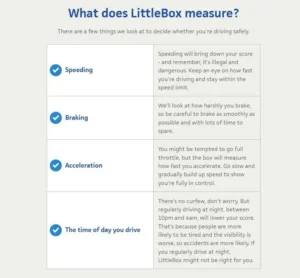
These products monitor driving behaviour, including speed, braking, acceleration and journey timing.
One of the most relevant restrictions for London motorists is the treatment of night driving.
Admiral confirms that regularly driving between 10pm and 4am can lower a LittleBox score.
There is no outright curfew, but a lower score may affect potential renewal benefits.
A young hospitality worker travelling home after midnight several times a week should therefore investigate whether the product suits their normal schedule.
Admiral also publishes a minimum declared mileage requirement of 1,000 miles annually and other vehicle eligibility conditions.
Our finding: Admiral is worth comparing for drivers prepared to accept monitoring. The published conditions make it less obviously suitable for people regularly driving overnight.
2. Hastings Direct – YouDrive and App-Based Driving Feedback
Official website: https://www.hastingsdirect.com/
Hastings Direct offers its YouDrive telematics product alongside conventional car insurance options.
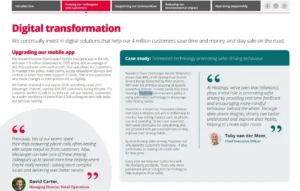
YouDrive combines a vehicle device with mobile technology to record driving and provide feedback.
Driving behaviour, including speed and mobile phone use, can influence the assessment.
For inexperienced motorists, this information may help identify habits worth improving.
However, a favourable driving score does not guarantee that a future insurance premium will fall.
A renewal quotation can also reflect claims costs, changes to the insured vehicle, where it is kept and other underwriting factors.
Before accepting a YouDrive quote, customers should examine the current requirements for using the device and application, how journeys are recorded and what happens when monitoring is interrupted.
Our finding: Hastings Direct provides a useful comparison between monitored and standard insurance. Its value depends on the actual price offered and the policyholder’s ability to follow the monitoring requirements.
3. Direct Line – Different Policies Through Different Sales Channels
Official website: https://www.directline.com/car-cover
Direct Line’s changing distribution arrangements are an important reason to review older insurance comparisons carefully.
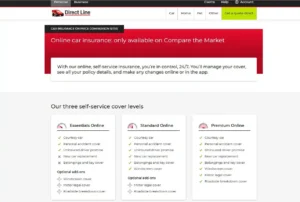
The company now sells selected online policies through Compare the Market.
Its comparison-site products include Essentials Online, Standard Online and Premium Online.
These are not identical to its directly purchased products.
Direct Line’s own information explains that certain direct policies include benefits such as telephone support, additional cover features and no administration fees for policy changes.
Its online policies operate through self-service accounts, with different administration-fee arrangements.
For example, the insurer publishes a possible mid-term administration charge of up to £19.04 for certain online policy changes, including applicable Insurance Premium Tax.
A young driver comparing two quotations from the same brand therefore needs to examine the actual product, rather than assuming that the cover and services are identical.
Direct Line also offers DrivePlus telematics for eligible younger drivers.
Our finding: Compare both the premium and the included services. The cheaper distribution channel may not provide the same benefits.
4. Churchill – DriveSure Has an Important Inactivity Condition
Official website: https://www.churchill.com/car-insurance/drivesure-telematics
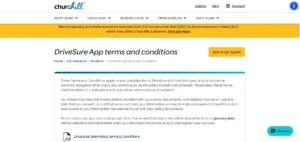
Churchill’s DriveSure uses a smartphone application to monitor driving behaviour.
It is designed for eligible drivers under 26 who hold a full UK driving licence.
The product can provide an upfront first-year discount for eligible customers who have passed their driving test.
Good driving behaviour may also influence renewal pricing.
However, Churchill’s published terms contain two particularly important requirements.
Customers must register the app within seven days of their policy beginning.
They must also notify Churchill when they expect no recorded journeys for 14 consecutive days.
Without the required notification, Churchill reserves the right to cancel the policy.
This condition could affect London students or occasional motorists who leave their car unused while travelling or studying.
Our finding: A low initial premium is not enough to judge this product. Drivers must be comfortable with the ongoing journey-recording and notification requirements.
5. Marmalade – Specialist Cover for Young and Learner Drivers
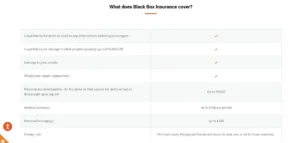
Official website: https://www.wearemarmalade.co.uk/black-box-insurance
Marmalade focuses on younger motorists and first-car insurance.
Its current black box product covers eligible drivers aged 17–30 as the main driver of their own vehicle.
Both provisional and full licence holders may qualify, subject to the policy conditions.
An important eligibility detail is that applicants aged 17–21 must add a parent or guardian as a named driver under the reviewed black box product.
This could be a deciding factor for some young adults.
Marmalade also uses journey scoring to assess driving performance.
Another notable change concerns its older Pay As You Go Black Box insurance product, which is no longer offered to new applicants.
Existing articles referring to that product as a current option should be updated.
Our finding: Marmalade is particularly relevant to first-car owners and learners, but its published age-related named-driver requirement must be checked.
6. LV= – Conventional Comprehensive Cover Without Young-Driver Tracking

Official website: https://www.lv.com/car-insurance
Not every motorist wants an app recording their journeys.
LV= provides conventional motor insurance that young drivers can compare against telematics quotations, subject to underwriting acceptance.
Its comprehensive products include protection for specified accidental damage, windscreen incidents and other insured events.
The precise cover depends on the policy purchased.
For a new driver, the useful comparison is not simply black box versus non-black box.
It is the final premium, compulsory excess, voluntary excess and benefits included in the price.
For example, one policy may appear inexpensive until the driver adds windscreen protection, breakdown assistance or legal expenses cover.
Another might cost more initially but include benefits the driver would otherwise purchase separately.
Our finding: LV= is worth obtaining a quotation from when assessing whether telematics genuinely delivers better overall value.
7. RAC – Black Box Insurance with Specific Eligibility Rules
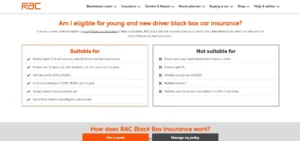
Official website: https://www.rac.co.uk/insurance/black-box-insurance
RAC offers black box insurance in partnership with Ticker.
Its published requirements help applicants establish whether the product may be suitable before starting a quotation.
They include specified age and driving-experience categories, with cover potentially available to drivers aged 17–21 who have held a full UK licence for less than two years.
For the reviewed product, vehicle values must generally fall between £500 and £45,000, and declared annual mileage must be between 1,000 and 18,000 miles.
Modified vehicles and certain types of commercial driving are excluded.
RAC also requires app registration within 24 hours of the policy starting.
There is no general night-time curfew, although frequent overnight journeys may affect driving scores.
Our finding: RAC’s published eligibility information is particularly useful for identifying whether an applicant should investigate the product further.
8. Tesco Insurance – Clubcard Savings for Eligible Drivers Aged 21+
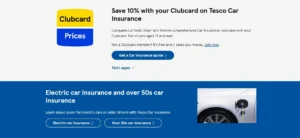
Official website: https://www.tescoinsurance.com/car-insurance/
Tesco Insurance offers Bronze, Silver and Gold comprehensive cover.
It currently advertises a 10% Clubcard discount for eligible drivers aged 21 or over.
The discount does not apply to optional extras and remains subject to the insurer’s conditions.
That age restriction is important because a driver aged 18 cannot assume eligibility for the promotion.
A separate correction concerns Tesco Box Insurance.
Tesco stopped offering new Box Insurance policies and renewals on 1 September 2024.
The discontinued black box product should not be confused with Tesco’s current conventional car insurance.
Our finding: Tesco is worth considering for eligible Clubcard members, but a percentage discount is meaningful only when compared with the final price offered by other insurers.
9. Aviva – Signature Cover and Multi-Car Options
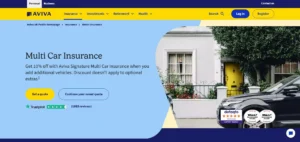
Official website: https://www.aviva.co.uk/insurance/motor/car-insurance/
Aviva offers conventional car insurance through its Signature range.
Families managing more than one vehicle can also investigate its multi-car arrangements.
Multi-car insurance can simplify administration, but any advertised discount must be compared against the total cost of separate policies.
A household with an experienced parent and a newly qualified driver should request genuine quotations using accurate details about both vehicles.
It is particularly important to identify the true main driver of each car.
A parent must not be declared as the main driver solely to obtain a cheaper quotation if the younger person is actually the principal user.
Aviva also applies age and other eligibility conditions to certain policy features, including Driving Other Cars protection.
Our finding: Aviva is worth comparing for households considering traditional cover or multi-car arrangements, provided the quoted benefits match their requirements.
10. Quotemehappy Connect – Rewards with Detailed Driving Conditions

Official website: https://www.quotemehappy.com/connected-car-insurance
Quotemehappy Connect is an Aviva-backed telematics insurance product available to eligible drivers aged 17–75.
It uses a smartphone application and a self-installed device.
The product offers safe-driving rewards and personalised renewal pricing.
Customers must activate the app, pair the device and complete journeys within the first 14 days of the policy.
The driving-rating conditions deserve particular attention.
Quotemehappy states that two consecutive red ratings or three separate red ratings within three months may lead to cancellation.
The insurer also confirms that journeys taken as a passenger in the insured vehicle can be recorded and count towards the customer’s driving score.
This could matter where family members share a vehicle.
Our finding: The rewards may appeal to digitally confident drivers, but the monitoring and cancellation provisions must be understood before purchasing.
What Did Our Comparison Reveal About Black Box Insurance?
Black box insurance is often marketed as a way for young people to reduce premiums.
The research shows that the products are more varied than this description suggests.
Some involve fitted devices, some require smartphones and others combine both.
There are also meaningful differences in registration deadlines, permitted vehicle use and journey monitoring.
Six Conditions That Young Drivers Should Not Overlook
These distinctions are not trivial.
A young driver could choose a policy because of an attractive first-year quotation, only to discover that its ongoing conditions do not fit their circumstances.
For some customers, conventional insurance without telematics may therefore be worth paying more for.
For others, the price difference may justify the monitoring requirements.
Only a real quotation allows that trade-off to be assessed.
Original Cost Analysis: Is the Cheapest First Car Actually the Cheapest to Own?
Young motorists frequently begin with the price of the vehicle.
Consider two hypothetical used cars.
The first costs £3,500. The second costs £4,200.
If both are mechanically sound and suitable for the driver’s needs, the cheaper car might initially seem the obvious choice.
However, insurance changes the calculation.
The difference is now only £150.
Car B costs £700 more to buy, but the hypothetical insurance saving offsets most of that difference.
This does not establish that any particular model has these insurance prices. The figures are illustrative.
It demonstrates why comparing insurance quotations before buying a vehicle can be more useful than focusing only on the purchase price.
A driver’s budget should also include servicing, tyres, repairs, fuel, vehicle tax and any applicable London road-user charges.
For motorists who need a vehicle only occasionally, comparing ownership with car rental companies in London may also be worthwhile.
Those considering longer-term arrangements can investigate vehicle leasing companies in London, although lease eligibility and insurance responsibilities must be checked carefully.
Does Paying Monthly Make Car Insurance More Expensive?
Monthly instalments can make a large premium easier to manage.
However, the total paid may be higher than the annual price.
Consider a hypothetical comprehensive policy costing £1,800 annually.
The insurer offers an alternative arrangement with a £300 initial payment followed by eleven £150 instalments.
The instalment arrangement increases the total by approximately 8.3% compared with the £1,800 annual premium.
This is a mathematical illustration, not a real insurer quotation or an annual percentage rate calculation.
Actual charges will differ.
Customers should review the total amount payable, repayment terms and any credit agreement before deciding.
Can a Higher Voluntary Excess Reduce the Overall Cost?
A higher voluntary excess may reduce an insurance premium.
But it also increases the amount a customer could have to contribute towards a covered claim.
Consider two otherwise equivalent hypothetical policies.
Policy B saves £140 annually.
However, it creates a potential additional standard excess payment of £300.
If the driver makes a covered claim requiring the full excess, the apparent saving may disappear.
This does not mean a higher excess is always a poor financial decision. It depends on the individual’s ability to meet the excess and the likelihood and nature of any claim.
The important consideration is whether the driver could afford the potential payment without financial difficulty.
Why Are Young Drivers Charged Higher Premiums?
Insurance pricing involves several factors, including driving experience, accident statistics, claims history and vehicle-related risks.
The Department for Transport’s September 2026 younger-driver factsheet provides useful context.
In 2025, drivers aged 17–24 accounted for 6.3% of full driving licence holders, but 19% of car driver fatalities.
Collisions involving younger drivers accounted for 20% of all killed or seriously injured casualties in car collisions.
These figures should be interpreted carefully.
They do not directly establish the likelihood of an individual driver being involved in a crash. Mileage and other exposure factors also matter.
The long-term trend is encouraging: the number of younger car driver fatalities fell by 81% between 1990 and 2025.
Nevertheless, inexperience remains an important consideration in road safety.
The Association of British Insurers also reported that insurers paid £3.2 billion in motor claims during the second quarter of 2026.
The average claim payout reached £4,900.
Modern vehicle technology can make repairs expensive, even where the visible damage appears relatively minor.
For a first-car buyer, repairability and insurance costs therefore deserve attention alongside reliability and fuel economy.
How Can Young Drivers Reduce Insurance Costs Without Taking Unnecessary Risks?
The most useful approach is to change the decisions that influence the real cost of owning and insuring a car.
Compare Insurance Before Purchasing a Vehicle
Request genuine quotations for the exact make, model and specification of several potential first cars.
A cheaper used vehicle is not necessarily cheaper to insure.
Insurers assess repair costs, vehicle performance, security, claims history and other characteristics.
Estimate Mileage Realistically
A Londoner who mainly uses public transport may drive considerably less than someone commuting by car five days a week.
Suppose a driver makes a 14-mile return journey four days a week for 46 weeks.
That produces 2,576 commuting miles.
Adding an estimated 1,800 miles for shopping, family visits and leisure gives 4,376 annual miles.
This provides a reasonable starting estimate, subject to the driver’s actual plans.
Do not declare artificially low mileage to obtain cheaper insurance.
Check Which Class of Use Is Required
Driving between home and one regular workplace may be covered under an appropriate commuting classification.
Travelling between different business locations or using the car for work-related activities may require business use.
The exact requirement depends on the insurer and the journeys involved.
Delivery and hire-and-reward activities may need specialist cover.
Customers should describe their work and intended vehicle use accurately.
Add Named Drivers Correctly
An experienced named driver may affect the quotation.
But the policy must identify the genuine main driver.
Declaring a parent as the main user when the younger person actually drives the car most frequently can constitute fronting, a form of insurance fraud.
Compare Comprehensive and Third-Party Cover
Third-party-only insurance is the minimum legal requirement.
Third-party, fire-and-theft cover adds specified protection for those losses.
Comprehensive insurance provides broader protection for the insured vehicle, subject to policy conditions.
Comprehensive insurance is not necessarily more expensive than third-party-only cover.
Requesting comparable quotations is more reliable than assuming the lowest level of cover will always be cheapest.
What Happens If a Young Driver Has an Accident in London?
A low annual premium becomes less attractive if the customer discovers important limitations when making a claim.
Before purchasing, drivers should check whether their policy includes a courtesy car, vehicle recovery, windscreen protection and access to an approved repair network.
They should also understand the compulsory and voluntary excesses that could apply.
Following an accident, the driver’s immediate priority should be safety, medical assistance where necessary and compliance with legal reporting obligations.
The insurer should then be contacted in accordance with the policy.
Independent accident management services may also be encountered during the claims process.
Readers who want to understand the wider range of available services can review our guide to accident management companies in London.
However, motorists should not assume that using an accident management company automatically produces a better result.
Credit hire arrangements, potential charges, contractual obligations and the relationship with the existing insurer should be checked before agreeing to services.
Is a Local London Insurance Company Better Than a National Provider?
A London office does not automatically mean an insurer will offer cheaper insurance to local motorists.
Many national providers offer policies throughout Greater London.
Others operate through intermediaries, brokers or digital platforms.
For ordinary car insurance, the important factors are whether the company accepts the driver, the cover provided and the total price.
A specialist broker may be helpful where the applicant has unusual circumstances, such as a modified car or a complicated driving history.
Readers looking beyond motor policies can use our broader insurance companies in London guide to explore different types of insurance providers.
Before purchasing, customers should establish which company underwrites the policy and check the relevant firm’s regulatory status using the Financial Conduct Authority register.
Questions Young London Drivers Should Ask Before Accepting a Quote
A good insurance comparison should answer five practical questions.
- What will I pay in total? Include instalment charges and optional extras.
- What happens if I make a claim? Check the combined excess, repair arrangements and courtesy-car conditions.
- Does the policy suit my working hours? Review telematics scoring and night-driving rules.
- What happens if I stop driving temporarily? Check app and journey-recording obligations.
- Can the insurer cancel the policy for poor driving scores or monitoring failures? Understand the relevant conditions before buying.
The answers are more useful than a generic five-star score that does not reflect the customer’s circumstances.
Final Verdict: Which Insurers Offer the Best Options for Young London Drivers?
There is no single best-value car insurer for every young Londoner.
Admiral, Hastings Direct, Churchill, Direct Line, Marmalade, RAC and Quotemehappy Connect provide different ways of using telematics.
Their tracking conditions, eligibility rules and renewal arrangements vary considerably.
LV= and Aviva offer conventional insurance alternatives worth comparing. Tesco’s Clubcard discount may be relevant to eligible drivers aged 21 and over.
The latest insurance data confirms that younger motorists continue to face much higher average quotations than more experienced drivers, despite recent reductions.
Our comparison also highlights a less obvious issue: an insurance policy can be inexpensive initially but unsuitable for the way its customer actually drives.
A London student who rarely uses their vehicle, a hospitality worker finishing late shifts and a first-car owner commuting every day should not automatically choose the same product.
The most effective decision is to compare genuine quotations, check the cover and read the conditions carefully.
Affordable insurance is not simply the policy with the lowest advertised premium. It is suitable protection at a total cost the driver can realistically manage.
Frequently Asked Questions
Which Insurance Company Is Cheapest for an 18-Year-Old in London?
No insurer can be named the cheapest for every 18-year-old without obtaining genuine quotations. Different companies use different underwriting models, and pricing depends on the driver’s vehicle, postcode, experience and other circumstances.
How Much Does Car Insurance Cost for an 18-Year-Old in 2026?
Confused.com’s September 2026 research reports an average comprehensive quotation of £2,083 for 18-year-olds across the UK. This is not a London-specific average or a guaranteed individual premium.
Can a 17-Year-Old Get Car Insurance Without a Black Box?
Yes, subject to an insurer accepting the application. Black box insurance is not a general legal requirement for young drivers.
Does Black Box Insurance Always Save Money?
No. It can produce an attractive quotation for some drivers, but prices vary. A conventional policy may offer better value depending on the driver’s circumstances and the restrictions attached to telematics cover.
Can Young Drivers Build a No-Claims Discount?
Many insurers offer a no-claims discount after eligible claim-free policy periods. Rules vary, particularly for named drivers and specialist learner policies.
Is Tesco Box Insurance Still Available?
No. Tesco stopped issuing new policies and renewals for its Box Insurance product on 1 September 2024.
Does Car Insurance Automatically Become Cheaper at 21?
No. Although age and experience can influence quotations, there is no universal price reduction at a specific birthday.
What Happens If My Black Box Policy Is Cancelled?
Cancellation can create difficulties when obtaining insurance in the future. Some providers may cancel a policy following serious breaches of monitoring conditions or specified poor-driving thresholds. The exact terms depend on the policy.
Should Young Drivers Choose the Highest Possible Voluntary Excess?
Not necessarily. A larger excess might reduce the annual premium, but the customer must be able to afford the amount payable if a claim occurs.
Research Methodology and Editorial Disclosure
This article is based on official insurer information, industry reports and government statistics. We independently analysed insurance costs, eligibility and policy restrictions. No live quotations or customer interviews were conducted. Prices and terms may change, and the companies are not ranked by verified premiums. All findings are for general information only.