

Companies.London Research – September 2026: We reviewed London EV charging networks, checked 60 charging-location records online, compared current pricing and payment methods, looked at charging speeds and London coverage, and analysed official public charging data.
Finding an Electric Car Charging Station in London is easier than it was a few years ago, but choosing the right network is not always simple.
Some chargers are designed for people who leave their cars parked overnight. Others are built for taxi drivers, delivery vans and motorists who want to charge quickly and continue their journey.
That difference matters.
London has 345.1 public EV chargers per 100,000 people, compared with 174.9 across the UK. That means London has around 97% more public charging points per person than the UK average.
But London performs less strongly when only rapid and ultra-rapid chargers are counted. It has 27.9 chargers rated 50kW or above per 100,000 people, compared with 41.7 across the UK.
So London has a lot of public chargers, but many are slower street chargers rather than high-speed charging hubs.
This guide helps you choose the right network based on where you charge, how long you can wait, how much you want to pay and whether you prefer contactless payment or an app.
Where Should You Start?
Before comparing individual companies, decide what kind of charging you actually need.
| Your Situation | Start With |
|---|---|
| You need a fast charge during a journey | MFG EV Power |
| You want high-speed charging at a competitive researched price | Tesla Open Superchargers |
| You want a purpose-built rapid charging hub | Fastned |
| You are parking for a few hours in central London | Source London |
| You want easy contactless rapid charging | Osprey Charging |
| You park on the street overnight | Connected Kerb |
| You want a large on-street network | Ubitricity |
| You want simple card payment | InstaVolt |
| You need another residential street option | Believ |
| You have a modern BP Pulse location nearby | BP Pulse |
This is the main point to remember throughout the guide:
The network ranked number one overall may not be the best network for your own journey.
A person living in a flat in Wandsworth has very different charging needs from a private-hire driver working across London all day.
What Does London’s EV Charging Network Look Like in 2026?
The audited data used for this guide records 31,635 public EV chargers in Greater London from a UK total of 121,171.
Using those figures:
31,635 ÷ 121,171 × 100 = 26.11%
So London represents around 26.11% of the UK’s public charging network in the dataset used for this analysis.
The more interesting number, however, is charger density.
London:
345.1 public chargers per 100,000 people
UK:
174.9 public chargers per 100,000 people
The difference is:
(345.1 − 174.9) ÷ 174.9 × 100 = 97.31%
That means London’s overall public charger density is approximately 97.31% higher than the UK average.
Another way to explain it is that London has about 1.97 times the number of public chargers per person.
Why Does London Still Have a Fast-Charging Problem?
The position changes when we look at chargers rated 50kW or above.
London:
27.9 rapid or ultra-rapid chargers per 100,000 people
UK:
41.7 per 100,000 people
This puts London approximately 33.09% below the UK average for higher-powered charging per person.
Our calculation also shows that the rapid-charging figure represents only around 8.08% of London’s total charger-density figure, compared with 23.84% across the UK on the same basis.
That helps explain something many EV drivers experience.
London may have plenty of charging points nearby, but the closest charger could be a slower street charger rather than one capable of delivering a large amount of energy in 20 or 30 minutes.
What Are the Best EV Charging Networks in London?
Here is the final comparison.
*Tesla prices can change depending on the location and time.
Prices were researched during September 2026 and can change. Check the operator or individual charger before starting a session.
Add Your London EV Charging Map Here
This is the best place to add your map.
The ranking gives readers the numbers first. Your map can then show where different networks appear around London before readers move into the detailed company reviews.
You could use different map markers for:
- Residential street charging
- Central London charging
- Rapid and ultra-rapid hubs
- Retail charging
- Forecourt charging
This will help visitors understand that London’s charging market is not one single network. Different types of chargers are concentrated in different places.
1. MFG EV Power
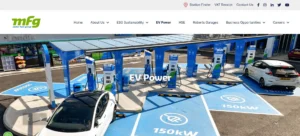
MFG EV Power takes first place with a score of 73/100.
Its main strength is fast charging.
The researched network includes chargers capable of reaching 400kW, although actual charging speed depends on the site, vehicle, battery temperature and how much power the car can accept.
MFG is particularly useful because many chargers are located on forecourts. Drivers can stop, charge and return to the road without treating the location as a long parking stay.
Payment is another advantage.
Contactless bank-card payment is available on the researched modern equipment, so drivers do not always need to create an account before charging.
The researched PAYG price was 77p per kWh.
Who Is MFG Best For?
MFG makes the most sense for:
- Taxi drivers
- Private-hire drivers
- Delivery vehicles
- Business fleets
- Drivers making longer journeys
- People who need a quick charge
What Is the Main Weakness?
It is not designed for cheap overnight charging.
Someone leaving a car parked outside their home for eight hours would usually be better served by a residential street-charging network.
Verdict: Best overall when speed, ease of use and quick turnaround matter.
2. Tesla Open Superchargers
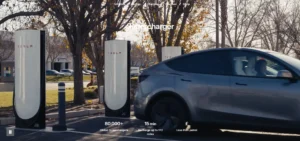
Tesla Open Superchargers finished very close behind MFG with 72/100.
The network performed especially well because it combines high charging speeds with relatively competitive researched prices.
The London locations checked included charging capability around 250kW.
The illustrative non-Tesla PAYG rate used in our comparison was approximately 58p per kWh.
However, Tesla does not have one fixed price across every charger. Prices can change by site and time, so drivers should always check the app before travelling.
Why Might Drivers Choose Tesla?
For compatible EVs, the combination of high speed and price can be attractive.
It is particularly useful for motorists who need a large amount of energy during a shorter stop.
What Is the Main Weakness?
Non-Tesla users generally need the Tesla app.
A driver who simply wants to arrive and tap a bank card may find MFG, Osprey or InstaVolt easier.
Verdict: One of the strongest options for drivers who want fast charging without automatically paying the highest rapid-charging prices.
3. Fastned

Fastned ranks third with 68/100.
Its biggest strength is the charging-hub experience.
Instead of placing one or two chargers in the corner of a car park, Fastned focuses on purpose-built charging locations designed around EV drivers.
The researched network includes equipment capable of reaching 400kW.
Contactless payment is available, while regular drivers can also use app-based charging features.
The researched standard rate was 79p per kWh.
Why Does Fastned Stand Out?
The design works well for:
- Electric vans
- Fleet vehicles
- Taxi drivers
- Drivers with accessibility needs
- People travelling through major London gateways
The wider bays and drive-through-style layouts can also be easier than trying to use a charger squeezed into a small parking space.
What Is the Main Weakness?
Coverage.
Fastned does not yet have the same number of London locations as large residential networks.
Verdict: Excellent when one of its hubs is on your route, but location remains important.
4. Source London

Source London takes fourth position with 66/100.
It serves a different purpose from the three networks above.
Source London is mainly useful when the car will already be parked.
Research showed charging speeds reaching 22kW AC, with a guest price of 65p per kWh.
Membership can reduce some day and night rates.
When Does Source London Make Sense?
Imagine you are driving into central London for:
- A meeting
- Shopping
- Work
- A restaurant visit
- A longer appointment
You may not need a 20-minute rapid charger.
If the car will be parked for two or three hours anyway, slower destination charging can be perfectly suitable.
What Is the Main Weakness?
It cannot compete with 150kW–400kW networks for drivers needing a quick turnaround.
Verdict: One of the more useful choices when parking and charging need to happen together.
5. Osprey Charging

Osprey ranks fifth with 65/100.
It performs well for drivers who want a fast charger without a complicated payment process.
Many modern Osprey chargers support contactless debit and credit cards, which means users can charge without first creating an account.
The researched network reaches approximately 175kW.
What Makes Osprey Easy to Use?
For an occasional EV driver, downloading several different charging apps can become frustrating.
Contactless charging removes much of that problem.
Arrive, connect the car, pay and start charging.
What Is the Main Weakness?
Price.
The rate used in our comparison was approximately 87p per kWh.
That makes it more expensive than several other options.
Verdict: Strong for convenience and accessibility, but check the price before charging.
6. Connected Kerb
Connected Kerb ranks sixth overall with 63/100, but it is one of the most useful networks for a particular type of London driver.
That driver is someone who does not have a driveway.
The network focuses heavily on residential streets and longer parking periods.
The researched standard price was 50p per kWh, while charging speeds can reach approximately 22kW AC depending on the charger.
Why Can Slow Charging Be Better?
Suppose your car is parked from 9pm until 7am.
You do not necessarily need a 300kW charger.
A slower charger beside the street may be more useful because the car would have been parked there anyway.
What Is the Main Weakness?
Connected Kerb is not suitable for rapid journey charging.
Payment can also require an app or digital account rather than direct contactless payment.
Verdict: One of the strongest choices for London residents who rely on street parking.
7. Ubitricity
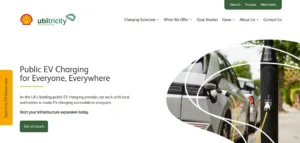
Ubitricity ranks seventh with 61/100, but it has a major advantage: London coverage.
The audited research classifies its footprint at 11,000+ public charging points, making it one of the most important residential charging networks in the capital.
Many chargers are built into lampposts or similar street furniture.
This allows charging infrastructure to be installed without filling pavements with large charging units.
The researched pricing model included:
Charging speeds are much lower than ultra-rapid networks, commonly in the region of 3.7kW to 7.4kW in the researched equipment.
Who Should Use Ubitricity?
It works best for people who:
Park on the street
Charge overnight
Do not have a home charger
Value a nearby charger more than fast charging
What Is the Main Weakness?
Speed.
A taxi driver cannot realistically treat a slow street charger as a replacement for an ultra-rapid charging hub during a busy working day.
Verdict: Strong on-street coverage makes Ubitricity important even though it ranks below the faster networks overall.
8. InstaVolt
InstaVolt ranks eighth with 59/100.
Its strength is simplicity.
The modern charging process is designed around contactless bank-card payment, meaning users do not have to join a network just to charge once.
Research included charging capability up to around 160kW.
The main reason it ranks lower is price.
The audited PAYG figure was 92p per kWh, which was the highest price in our standardised cost comparison.
Does That Mean InstaVolt Is Bad Value?
Not necessarily.
Price is only one part of EV charging.
A working charger next to your route may be worth paying more for compared with driving several miles to save a few pence per kWh.
Verdict: Good for drivers who value quick, simple payment, but less attractive for price-sensitive users.
9. Believ

Believ ranks ninth with 56/100.
Its role is mainly residential.
Like Connected Kerb and Ubitricity, the network is designed to help drivers who cannot install a charger on their own property.
The researched standard PAYG price was 66p per kWh.
Standard street equipment generally relies on app-based payment rather than contactless bank-card readers.
Where Does Believ Fit?
It makes more sense for:
Local residents
Long parking stays
Overnight charging
Drivers without private parking
It makes less sense for someone who needs another 100 miles of range quickly.
Verdict: A useful residential option where the network has good local coverage.
10. BP Pulse

BP Pulse comes tenth with 46/100.
That position needs some context.
The network contains a mixture of older charging equipment and newer rapid charging infrastructure.
The experience can therefore vary greatly between locations.
Research showed newer rapid equipment reaching 150kW+, while the high-powered PAYG rate used in our comparison was around 89p per kWh.
Modern rapid equipment commonly supports contactless payment, while older chargers may depend more heavily on apps.
Why Did BP Pulse Score Lower?
The main issue was consistency.
A modern high-speed charging hub can be very useful, but older parts of the network have attracted weaker reliability feedback.
Should Drivers Avoid BP Pulse?
No.
If a modern BP Pulse rapid charger is conveniently located on your route, it can still be a practical option.
The ranking compares the network as a whole rather than saying that every BP Pulse charger is poor.
Verdict: Check the individual location and charger type rather than judging the entire network by the overall score.
How Much Could a 20% to 80% Charge Cost?
Charging prices written as “pence per kWh” can be difficult to compare.
So we used a simple example.
Assume the car has a:
60kWh usable battery
and arrives with:
20% remaining
The driver wants to reach:
80%
That means the car needs:
60 × 60% = 36kWh
of electricity.
Using the researched prices:
In this example, the gap between Connected Kerb and InstaVolt is:
£15.12
That means InstaVolt costs around 84% more for the same 36kWh of electricity in this comparison.
But this needs context.
Connected Kerb provides slower residential charging.
InstaVolt provides much faster journey charging.
You are not only paying for electricity. With a rapid charger, you are also paying for speed and convenience.
Which Network Is Best for Different Types of London Drivers?
Instead of looking only at rank numbers, choose based on how you use your car.
For Taxi and Private-Hire Drivers
Start with:
- MFG EV Power
- Tesla Open Superchargers
- Fastned
The main reason is speed.
Someone earning money while driving cannot normally leave a vehicle charging for several hours during the working day.
For London Residents Without a Driveway
Start with:
- Connected Kerb
- Ubitricity
- Believ
These networks are better suited to long residential parking periods.
For Central London Drivers
Consider:
Source London
and nearby modern chargers from other networks.
If your car is going to remain parked during a meeting or appointment, destination charging may make more sense than an ultra-rapid charging stop.
For Drivers Who Hate Charging Apps
Look first for modern contactless chargers from:
- MFG EV Power
- Osprey
- InstaVolt
- Fastned
Always check the individual location because payment methods can differ across older and newer equipment.
For Business Fleets and Electric Vans
Focus on:
- MFG EV Power
- Fastned
- Tesla Open Superchargers
Large multi-bay rapid hubs can reduce the time commercial vehicles spend away from work.
Why Does Your London Borough Matter?
London’s charging network is not spread evenly across the capital.
The local-authority data used in this analysis shows major differences.
These figures are from the local-authority dataset measured on 1 July 2026.
How Large Is the Westminster–Havering Gap?
Westminster:
2,605.4 public chargers per 100,000 people
Havering:
42.4 per 100,000
The calculation is:
2,605.4 ÷ 42.4 = 61.45
So Westminster has around 61.45 times the charger density of Havering on this measure.
The gap is also large for rapid charging.
The City of London records 185 chargers rated 50kW+ per 100,000 people, while Harrow has 3.2.
That is a difference of approximately:
57.81 times.
This is why a London-wide average can never tell the full story.
A driver in Westminster may have a completely different charging experience from someone in an outer London borough.
How Should You Use the Map Before Choosing a Charger?
Once you add your map, readers should use it alongside this guide in four simple steps.
Step 1: Find Chargers Near Your Route
Do not begin with price.
First identify the networks that are actually convenient for your home, workplace or journey.
Step 2: Decide How Fast You Need to Charge
If the car will be parked overnight, a slower charger can be suitable.
If you need to continue your journey quickly, look for 50kW+ charging and preferably a higher-powered rapid or ultra-rapid option.
Step 3: Check the Full Cost
Look beyond the electricity price.
Check for:
Parking charges
Maximum stay rules
Membership costs
Idle fees
Different peak and off-peak prices
Step 4: Check How You Pay
If you do not want another app, look for contactless payment.
If you regularly use the same network, an app or membership may sometimes provide a better price.
This map-first approach is often more useful than simply choosing whichever company appears number one in a national ranking.
Is the Cheapest Electric Car Charging Station Always the Best?
No.
Imagine there are two chargers.
One costs 50p/kWh but is slow and several miles away.
Another costs 77p/kWh, is beside your route and can deliver energy much faster.
The cheaper electricity does not automatically produce the better journey.
You should compare:
Price + speed + location + parking + payment
rather than price alone.
This is particularly important in London, where slower residential chargers and high-powered journey chargers serve very different purposes.
What Should You Check Before Plugging In?
Before starting a charging session, quickly check the charger screen, app or operator information.
Make sure you know:
The current price per kWh
The charging speed
Whether parking charges apply
Whether there is a maximum stay
Whether an idle fee applies
How payment works
Pricing can change, so the figures in this guide should be treated as a researched September 2026 comparison rather than a permanent tariff list.
Does Every Public Charger in London Accept Contactless Payment?
No.
This is one of the most important practical differences between networks.
Rapid networks such as MFG EV Power, Fastned, Osprey and InstaVolt commonly provide contactless payment on modern chargers.
Residential street networks may use apps, RFID cards or QR codes instead.
Ubitricity’s researched street equipment, for example, does not generally use physical contactless payment terminals.
Tesla also usually requires non-Tesla drivers to use its app.
Does London Need More Rapid EV Chargers?
The figures suggest that rapid charging remains one of London’s main infrastructure gaps.
Overall public charger density:
- London: 345.1 per 100,000
- UK: 174.9 per 100,000
50kW+ charger density:
- London: 27.9 per 100,000
- UK: 41.7 per 100,000
London therefore has nearly twice the overall charger density while sitting around 33% below the UK average for rapid and ultra-rapid chargers per person.
This matters most to people who cannot afford to wait hours for a charge, including commercial and high-mileage drivers.
Which London EV Charging Network Is Best Overall?
There is no perfect answer for every driver.
Our scoring system places MFG EV Power first with 73/100, followed closely by Tesla Open Superchargers at 72/100 and Fastned at 68/100.
But the better way to choose is:
Need fast charging?
Start with MFG EV Power, Tesla or Fastned.
Need central London parking and charging?
Look at Source London.
Need easy contactless payment?
Consider MFG, Osprey or InstaVolt.
Live in a flat or have no driveway?
Start with Connected Kerb, Ubitricity or Believ.
Leave your car parked overnight?
A slower residential charger may be cheaper and more practical than an ultra-rapid hub.
Final Verdict
London’s EV charging network is large, but it is not evenly spread and it is not built around one type of driver.
London has around 97% more public chargers per person than the UK average, yet its higher-powered charging provision is around 33% lower per person.
There are also major differences between boroughs, with the data showing a charger-density gap of more than 60 times between Westminster and Havering.
That means choosing an Electric Car Charging Station in London should work like planning a route.
First decide where you need to charge.
Then decide how long you can wait.
After that, compare price, speed and payment method.
For fast charging, MFG EV Power takes the top overall position in this comparison. Tesla performs strongly for high-speed value, while Fastned is a strong choice for purpose-built charging hubs.
For people who park on London streets overnight, Connected Kerb, Ubitricity and Believ can make far more sense.
The best London EV charging network is therefore not simply the company with the fastest charger or the lowest advertised price.
It is the network that fits your location, your journey and the amount of time your car will stay parked.