
Updated: October 2026
London does not have a shortage of sandwiches. The more interesting question in 2026 is why two businesses selling something between slices of bread can now offer completely different experiences.
One Londoner might spend a few pounds on half a sandwich before catching a train. Another might travel across the city and pay more than £10 for a sandwich built around slow-roasted meat, artisan bread and restaurant-style sauces.
That gap tells us more about the modern London sandwich market than simply counting branches.
Established operators continue to serve commuters and office workers, while newer specialists are turning sandwiches into destination food. Bakery-led businesses are putting more emphasis on bread, Italian food-to-go companies are competing with conventional sandwich chains, and office catering is becoming a significant second market for several brands.
This updated Companies.London guide examines 10 sandwich companies in London, but it also goes further. We have compared where they operate, how their opening patterns differ, what current prices reveal and how much selected office catering packages work out at per person.
Readers researching the capital’s wider food sector can also explore our guide to food companies in London.
How We Selected the Companies?
This is not a ranking based purely on branch numbers.
To be included, a business needed an active London presence in 2026 and a sandwich offering important enough to make it relevant to someone specifically looking for sandwich companies.
We also considered whether the business added something distinct to the comparison.
That produces a deliberately mixed list. Pret represents large-scale convenience. Birley is unusually concentrated around financial districts. Sandwich Sandwich represents rapid expansion. The Dusty Knuckle brings a bakery-first approach, while Max’s, The Black Pig and Crunch illustrate the rise of the destination sandwich.
The company information below was checked against current official sources. The additional market comparisons and calculations are Companies.London editorial analysis based on that information.
Top 10 Sandwich Companies in London
1. Pret A Manger
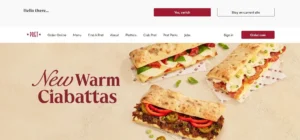
Pret A Manger remains one of the easiest sandwich businesses to encounter while moving around central London.
Its value is primarily convenience. Shops around stations, shopping streets and business districts allow customers to buy lunch without planning a journey around the food itself.
However, Pret’s sandwich range has continued to change during 2026.
In March, the company expanded its half-sandwich and half-flatbread offering and introduced new triple sandwiches. In September, it launched the £4.99 Pick Your Pair offer across selected smaller lunch products.
Current product information also demonstrates the range between smaller and more substantial options. A Classic Super Club Half Sandwich was listed at £3.10 when checked, while the larger New Yorker Club Sandwich was £7.00.
What the Price Difference Tells Us
Those two products create an interesting £3.90 spread within one company.
It demonstrates how large sandwich chains are no longer working around a single lunchtime price point. Smaller portions can function as part of a combined lunch, while substantial club sandwiches occupy a different spending level.
Pret is therefore competing simultaneously for the customer wanting a light snack and the customer replacing a full lunch with one sandwich.
Best suited to: commuters, fast lunches and customers who prioritise availability.
Official website: https://www.pret.co.uk/
2. Sandwich Sandwich
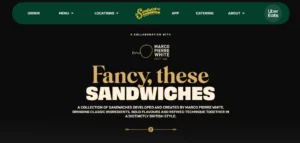
Sandwich Sandwich is one of the clearest examples of how London’s sandwich market has changed.
The business arrived from Bristol and opened its first London store at Gresham Street in 2024. Its official directory now lists five London locations: Gresham Street, Mark Lane, Broadgate, Tottenham Court Road and Paddington Station.
The sandwiches are intentionally substantial, with large quantities of fillings and combinations designed to feel more like a complete meal than a small packaged lunch.
The company has also built catering, click-and-collect and delivery into its London operation.
Companies.London Location Analysis
There is an interesting pattern hidden inside those five addresses.
Gresham Street, Mark Lane and Broadgate all serve the City or immediate City office market. That means 3 of the company’s 5 current London locations 60% are concentrated around London’s core business district.
Tottenham Court Road changes the model by targeting the West End, while Paddington introduces a major transport-hub audience.
This suggests that Sandwich Sandwich’s London growth has not begun as a conventional residential-high-street expansion. Its first priority has been places with unusually high concentrations of workers, commuters and daytime footfall.
That is useful context that a simple branch list does not show.
Best suited to: substantial lunches, office workers and customers wanting larger portions.
Official website: https://sandwichsandwich.co.uk/
3. Birley Sandwiches
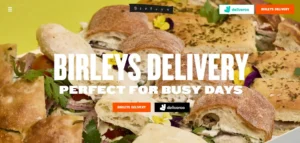
Birley Sandwiches has perhaps the most geographically focused strategy of any multi-site company on this list.
Its official store directory currently lists nine locations.
Five Mark Lane, Old Broad Street, Cannon Street, Paternoster Square and New Street Square are classified by Birley as City locations. The remaining four Churchill Place, Canada Place, One Canada Square and Bank Street are in Canary Wharf.
The menu centres on made-to-order sandwiches alongside speciality combinations, soups, salads and breakfast food. Current examples range from traditional egg mayonnaise and roast turkey to porchetta with Mediterranean vegetables and pork belly with pickled carrots and gochujang mayonnaise.
Birley’s Footprint Is Almost Perfectly Split
By our calculation, approximately 56% of Birley’s locations are in the City and 44% are in Canary Wharf.
That is an unusually concentrated network.
Instead of spreading nine stores around residential London, tourist districts and shopping centres, Birley has effectively built its business around two major employment centres.
This explains why corporate and professional customers are so important to the brand. Geography itself becomes part of the business model.
Companies arranging larger workplace orders can also compare dedicated catering companies in London when the requirement extends beyond sandwiches.
Best suited to: City professionals, Canary Wharf workers and made-to-order lunches.
Official website: https://www.birleysandwiches.co.uk/
4. Pure
Pure combines a consumer food-to-go business with a sizeable workplace-catering operation.
Its current shop directory lists customer-facing locations including Baker Street, Canary Wharf, Cheapside, Hammersmith, High Holborn, Liverpool Street, Moorgate, Philpot Lane, St Bride, Victoria Street and Waterloo Station, alongside dedicated catering hubs.
That gives us 11 named London shops before counting the catering hubs.
Its sandwich selection is relatively compact compared with some competitors, but Pure places more emphasis on nutritional information and dietary filtering. Current sandwiches include Protein Chicken Salad, Skipjack Tuna & Smoky Corn and a vegan Chickpea, Sriracha & Smashed Avo option.
Pure’s Two Businesses Are Increasingly Connected
Pure is interesting because its shops and corporate-food operation appear designed to reinforce one another.
The catering business offers sandwich boxes, gluten-free bread sandwiches, wraps, pretzel subs and salads, while the retail stores place the brand directly in many of the business districts where potential corporate customers work.
That gives Pure a different position from an independent sandwich shop whose revenue depends mainly on people walking through the door.
For office managers comparing broader options, our guide to catering for companies in London provides additional providers beyond sandwich specialists.
Best suited to: business lunches, dietary variety and workplace catering.
Official website: https://www.pure.co.uk/
5. Benugo
Benugo’s competitive advantage is unusual because much of it comes from location rather than simply its sandwich recipes.
The company operates in places where customers are already spending time: museums, parks, cultural attractions and transport hubs.
Its London estate includes Benugo operations at locations such as St Pancras International, Waterloo Station, the V&A and the Natural History Museum.
At the V&A, for example, sandwiches sit alongside salads, hot dishes and cakes, while St Pancras combines breakfast and lunch sandwiches with coffee and other food.
Benugo Competes for a Captive Moment
This makes Benugo structurally different from most of the other sandwich companies here.
A tourist inside a museum or a traveller waiting at St Pancras is not necessarily searching across London for the best possible sandwich. They want an acceptable lunch in a place that fits naturally into their day.
Benugo’s locations reduce the amount of effort required to find food.
That means convenience is being created through venue placement, whereas Pret creates it primarily through a dense shop network.
Readers interested in the café side of the market can also explore our guide to coffee companies in London.
Best suited to: tourists, museum visitors and rail passengers.
Official website: https://www.benugo.com/
6. The Dusty Knuckle
The Dusty Knuckle starts from bread rather than from the traditional sandwich-chain model.
Its main cafés are in Dalston and Harringay, while it also operates a seven-day van at Highbury Fields.
The company identifies itself as a bakery and café and also runs a youth training programme designed to provide training and mentoring.
For sandwich customers, the most important distinction is that the bread is not an anonymous container.
The bakery operation is central to the business, which changes how the sandwich is positioned.
Why Bakery-Led Sandwiches Matter
Large sandwich companies can optimise around filling choice, refrigeration, transport and fast service.
A bakery-led company can begin with a different question: what works with the bread being made?
That difference may sound small, but it creates another competitive category entirely.
The Dusty Knuckle is therefore competing partly with sandwich shops and partly with London’s modern artisan bakery scene.
It also generates revenue beyond ordinary café visits through bread classes, wholesale supply and other activities.
Best suited to: customers who place significant importance on bread and bakery craftsmanship.
Official website: https://www.thedustyknuckle.com/
7. Max’s Sandwich Shop

Max’s Sandwich Shop at 19 Crouch Hill illustrates the opposite of the high-volume multi-site model.
There is one principal shop, and customers frequently need to make a deliberate journey to reach it.
Its current schedule is also unusual for a sandwich business. The shop is closed Monday and Tuesday, operates separate lunch and evening services Wednesday to Friday, and has longer weekend opening periods.
This does not look like a business built solely around Monday-to-Friday desk lunches.
The menu philosophy focuses on contrasting hot, cold, sweet, sour, crunchy and soft elements, while Ham, Egg ‘n’ Chips remains one of its best-known sandwiches.
Max’s Behaves More Like a Restaurant
Opening into the evening is an important clue.
Many sandwich chains effectively lose their core market after the afternoon office rush. Max’s operates differently because customers may treat the sandwich as the main meal rather than a convenient midday substitute.
It also accepts large catering jobs and says it can cater everything from office parties and weddings to very large sandwich orders.
That diversification makes a single-site business less dependent on simply selling as many weekday lunches as possible.
Best suited to: destination dining, creative sandwiches and larger catered orders.
Official website: https://maxssandwichshop.com/
8. The Black Pig

The Black Pig occupies the premium market-sandwich category.
Its Borough Market operation focuses on a small menu built around carefully sourced ingredients and chef-led preparation.
The current flagship pork sandwich is listed at £13.50, with another pork option at £12.50 and a smoked oyster mushroom vegetarian sandwich at £11.50.
Its principal Borough Market operation trades Tuesday through Sunday, while the West Norwood location currently operates for only three hours on Fridays, from 11:30 to 14:30.
The West Norwood Opening Is an Interesting Micro-Format
A three-hour Friday service is almost the opposite of the traditional chain approach.
Instead of maximising seven-day availability, the business creates a tightly limited service window.
That can concentrate demand and allow a food company to test or serve another area without carrying the same operating model as a full-time branch.
Whether that particular format changes in future remains to be seen, but it demonstrates that London’s sandwich market does not require every successful company to follow conventional retail opening patterns.
Best suited to: Borough Market visitors, premium sandwiches and slow-cooked fillings.
Official website: https://www.theblackpigsandwiches.co.uk/
9. Crunch
Crunch opened its first permanent bricks-and-mortar location on Dean Street in Soho in 2025.
It currently operates from 60 Dean Street and lists opening hours of 11:30 to 21:00.
Its menu firmly belongs to the premium end of the market.
A Chicken Katsu Crunch is currently £12, while Carla’s Lobster Roll is £19. The range also includes Buffalo Cauliflower and other heavily constructed sandwiches.
Crunch Shows Why Sandwiches Now Compete With Restaurant Meals
At £19, the lobster roll is not really competing with a basic supermarket sandwich.
Its competitors are broader Soho lunch and dinner options.
That matters when thinking about London’s sandwich market as a whole. The category now stretches from inexpensive half sandwiches to products priced similarly to dishes in casual restaurants.
Crunch represents the upper end of that transformation.
Its evening opening hours reinforce the point: this is not solely a 12:30pm office-lunch business.
Best suited to: Soho visitors, premium sandwiches and customers seeking unconventional combinations.
Official website: https://www.sandwichuprising.com/
10. Coco di Mama
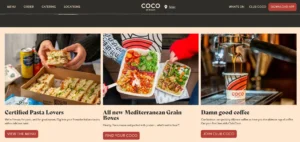
Coco di Mama began on Fleet Street in 2011 and now states that it has 13 central London stores.
Although the brand is strongly associated with pasta, sandwiches and baguettes form an important part of its Italian-inspired food-to-go range.
Its wider distribution strategy is particularly notable. In addition to its London shops, Coco says its grab-and-go products are now sold through more than 2,000 Tesco and Sainsbury’s stores nationally.
The company also operates London office catering covering breakfast and lunch, with delivery areas including central business districts.
Coco Has More Than One Route to the Customer
A conventional sandwich shop depends heavily on customers entering its stores.
Coco now reaches people through three channels: its own shops, workplace delivery and branded products in major supermarkets.
That makes its growth model substantially different from a single-format sandwich company.
The implication is important for the wider food-to-go market: future competition may be less about who has the most branded shops and more about which company can reach customers through the greatest number of occasions.
Best suited to: Italian-style lunches, central-London workers and office catering.
Official website: https://www.cocodimama.co.uk/
New Analysis: Where Are London’s Sandwich Companies Actually Concentrated?
Counting branches tells only half the story. Location type is arguably more important.
Birley provides the clearest example. All nine listed stores are located in either the City or Canary Wharf. There is no attempt to create an evenly distributed London-wide network.
Sandwich Sandwich is moving in a similar direction, although with more variety. Three of its five London stores are around the City, while Tottenham Court Road provides West End exposure and Paddington captures station traffic.
Pure has a broader footprint, but many of its London shops are still positioned around workplaces or important transport locations, including Canary Wharf, Cheapside, Liverpool Street, Moorgate, Victoria and Waterloo.
Meanwhile, Max’s, The Black Pig and Crunch depend much more heavily on customers choosing a specific destination.
This allows London’s sandwich market to be divided into four practical location models:
This framework is more useful than simply asking which brand has the most branches because it explains why the businesses can coexist without serving exactly the same customer.
New Analysis: Opening Hours Reveal Who Each Company Is Really Targeting
Opening hours provide another useful clue.
Consider Pure.
Its Moorgate store currently closes at 19:30 Monday to Thursday, 17:00 Friday and remains closed during the weekend. Its Waterloo Station store, by contrast, opens seven days and trades until 22:30 on weekdays.
The difference is logical.
Moorgate depends heavily on the working-week population. Waterloo serves commuters, tourists and weekend travellers.
Sandwich Sandwich shows the same pattern internally. Broadgate is currently Monday-to-Friday only, while Tottenham Court Road trades seven days and remains open until 21:00.
This suggests an important principle:
A sandwich company’s opening hours may tell you more about its intended customer than its menu does.
Office-heavy locations can afford to shrink dramatically at weekends. Transport and West End locations need a seven-day model.
That distinction could be useful for anyone evaluating where a new sandwich business might work in London.
New Analysis: What Does London Office Sandwich Catering Really Cost Per Person?
Catering menus allow a comparison that ordinary retail prices do not.
Pure’s 2026 catering menu lists a standard sandwich box serving 12 people at £79.99. That works out at approximately £6.67 per person if the box serves the stated maximum.
Its gluten-free sandwich box serves four for £29.95, equivalent to approximately £7.49 per person.
Sandwich Sandwich currently lists a large favourites sandwich box for up to eight people at £60, equivalent to £7.50 per person.
Its large vegan box costs £70 for up to eight people, or £8.75 per person. Some four-person single-filling boxes range from £30 to £38, which equates to approximately £7.50 to £9.50 per person.
These calculations create a more useful office-planning comparison:
These figures are not perfectly like-for-like because fillings, portions and product formats differ. They nevertheless show that an office manager ordering for 20 people should not judge catering economics from the price of a single shop-bought sandwich.
For larger events, dedicated London catering companies may provide another useful comparison.
New Analysis: London’s Sandwich Price Ladder Is Now Extremely Wide
Using currently published menu examples gives us another revealing comparison.
Pret’s Classic Super Club Half Sandwich is £3.10, while its larger New Yorker Club is £7.00.
At The Black Pig, current sandwiches run from £11.50 to £13.50.
Crunch’s Chicken Katsu is £12, while its lobster roll reaches £19.
That means the examples examined for this article range from £3.10 to £19.
The highest-priced example is more than six times the price of the lowest-priced one.
That does not mean one provides six times the value. Portion size, ingredients and customer occasion are completely different.
Instead, the comparison proves that “sandwich” is now too broad a category to describe one price market.
A £3.10 half sandwich functions as convenience food. A £19 lobster roll functions more like a restaurant or premium street-food purchase.
The product name may be similar, but economically they belong to different markets.
New Analysis: Corporate Catering Is Becoming a Second Business, Not an Add-On
Several companies on this list appear to treat workplace catering as a substantial commercial channel rather than a small extra service.
Sandwich Sandwich has a dedicated London catering operation, accepts next-day orders up to a stated cutoff and offers sandwich platters, breakfast products, salads and other group food.
Pure operates dedicated catering hubs alongside its retail shops and offers meeting, event and workplace food services.
Coco di Mama offers next-day London breakfast and lunch catering and serves areas including Canary Wharf, Victoria and White City.
Max’s can handle substantial bespoke sandwich orders despite having only one shop.
This creates an important change in how sandwich companies should be viewed.
A physical shop is no longer necessarily the complete business.
A company may use shops for brand visibility and individual sales while kitchens, delivery systems and corporate relationships generate additional revenue away from the retail counter.
That is particularly relevant in London because a single corporate order can replace dozens of separate lunchtime transactions.
Businesses looking beyond sandwich specialists can also compare our guide to catering for companies in London.
Chain vs Independent Is Becoming the Wrong Comparison
It is tempting to divide London sandwiches into “chains” and “independents”, but the distinction is becoming less useful.
Sandwich Sandwich began as a family operation and now has multiple London sites, an app and corporate catering.
The Dusty Knuckle combines cafés with wholesale baking, classes and a training programme.
Coco di Mama combines branded shops, delivery, office catering and national supermarket distribution.
Max’s operates a single restaurant-style shop but can take very large catering orders.
These companies demonstrate that scale no longer has to mean simply opening another identical shop.
Businesses can scale through delivery, wholesale supply, supermarket products, catering, events or digital ordering while retaining a relatively small physical footprint.
For London food businesses, that may be one of the more important trends to watch over the next few years.
Which Sandwich Company Fits Different London Situations?
Rather than naming one universal winner, it is more useful to match the business model to the occasion.
What Should Businesses Check Before Ordering Sandwich Catering?
Price per person is only the beginning.
Businesses should also check order cutoffs, minimum quantities, delivery areas, labelling and allergen policies.
For example, Sandwich Sandwich states that it cannot guarantee completely allergen-free catering because of cross-contact and does not offer a gluten-free option through its catering website for that reason.
Pure, meanwhile, offers boxes made with no-gluten-containing bread but also explains that food is prepared in environments where it cannot guarantee complete absence of allergens.
This distinction is important.
A product described as gluten-free or made with no-gluten-containing ingredients should not automatically be treated as suitable for every severe allergy or medical requirement without checking the company’s latest allergen guidance.
Final Thoughts
London’s sandwich market in 2026 cannot realistically be described as one industry selling one type of lunch.
There is a convenience market, an office market, a visitor market and an increasingly important premium destination market.
Pret succeeds partly because customers do not need to plan around it.
Birley has taken almost the opposite geographic strategy, building its nine-store network entirely around two major employment centres.
Sandwich Sandwich is using City locations as a platform for rapid London expansion, while Pure combines retail shops with a separate workplace-catering infrastructure.
Benugo uses museums, stations and parks to capture customers already spending time in those locations.
The Dusty Knuckle approaches sandwiches through bakery craftsmanship. Max’s behaves more like a sandwich restaurant. The Black Pig turns market food into a premium sandwich experience, and Crunch pushes the category into price territory that overlaps with casual dining.
Coco di Mama demonstrates another possible future: a food-to-go company that reaches customers through its own stores, corporate delivery and supermarket shelves.
The most significant conclusion from our 2026 research is therefore not that one sandwich company is replacing another.
It is that London’s sandwich market is splitting into increasingly specialised business models.
The companies likely to remain relevant are those that understand precisely when, where and why their customer is buying lunch—whether that is seven minutes before a train, between meetings in Canary Wharf, during a museum visit or as the main reason for travelling across London.
Locations, menus, opening hours and prices can change. Companies.London checked the referenced information against official company sources available in October 2026. Calculated percentages and per-person catering figures are Companies.London editorial calculations based on those published figures.
Frequently Asked Questions
How Many London Stores Does Sandwich Sandwich Have in 2026?
Its current location directory lists five London sites: Broadgate, Tottenham Court Road, Mark Lane, Gresham Street and Paddington Station.
How Many Birley Sandwiches Locations Are There?
Birley’s current directory lists nine locations: five in the City and four in Canary Wharf.
Which Sandwich Companies Are Strongest Around London’s Business Districts?
Birley has perhaps the clearest office-district focus, with every listed location in the City or Canary Wharf. Pure and Sandwich Sandwich also have significant exposure to major London employment centres.
Which Companies Offer Sandwich Catering?
Pure, Sandwich Sandwich, Coco di Mama and Max’s Sandwich Shop all currently advertise catering or large-order services.
For a broader comparison, see our guide to catering companies in London.
How Much Can Office Sandwich Catering Cost Per Person?
From the current examples analysed by Companies.London, selected sandwich boxes work out at roughly £6.67 to £9.50 per person when divided by their stated maximum serving capacity. Actual costs depend on the filling, box type, quantity and delivery requirements.
Which Sandwich Company Is Suitable for Tourists?
Benugo has an unusual advantage for visitors because it operates within or around major museums, parks and transport locations including St Pancras, Waterloo, the V&A and Natural History Museum.
Are Premium Sandwiches Really More Than £10 in London?
Yes. Current examples include sandwiches between £11.50 and £13.50 at The Black Pig and products from £12 up to £19 at Crunch.