
Last Updated: June 2026
Customer expectations have changed dramatically over the past few years. Small businesses are no longer competing solely on price, products, or services. Today’s customers expect fast responses, personalised communication, and seamless experiences across email, phone, websites, social media, and messaging platforms.
For many small businesses in London, managing these interactions manually is becoming increasingly difficult. Spreadsheets, notebooks, email folders, and disconnected systems often lead to missed opportunities, poor customer experiences, and lost revenue.
This is where CRM software becomes essential.
Customer Relationship Management (CRM) software helps businesses organise customer information, track sales opportunities, automate routine tasks, improve customer retention, and gain valuable insights into business performance.
The CRM industry is growing faster than ever. The global CRM market is now worth approximately £97.6 billion and is projected to exceed £260 billion by 2032. More importantly for small businesses, studies show that companies using CRM software achieve an average return of £2.40 for every £1 invested, while automation features can save employees up to 14 hours per week.
For London businesses operating in one of the most competitive commercial environments in Europe, CRM software is no longer a luxury. It has become a fundamental business tool.
In this guide, we compare the best CRM software for small companies in London based on pricing, features, AI capabilities, customer reviews, scalability, UK support, and overall value.
Why You Can Trust This Guide?
Unlike many CRM comparison articles that simply recycle vendor marketing material, this guide evaluates platforms using multiple factors, including:
- Current UK pricing
- Latest 2025–2026 features
- AI capabilities
- Trustpilot reviews
- G2 customer ratings
- Ease of implementation
- Integration options
- GDPR compliance
- UK support availability
- Scalability for growing businesses
We also considered emerging CRM trends affecting London SMEs, including AI-powered automation, hybrid working requirements, and increasing customer experience expectations.
CRM Software Market Statistics Every Business Owner Should Know
The CRM industry continues to evolve rapidly as businesses invest in customer experience, automation, and artificial intelligence.
These figures highlight why CRM software has become one of the most important investments for modern businesses.
Why Small Companies in London Need CRM Software?
London is home to more than one million businesses, making it one of the most competitive commercial hubs in Europe.
Whether you’re running a digital agency in Shoreditch, a financial consultancy in Canary Wharf, a property company in Kensington, or an ecommerce business serving customers nationwide, effective customer management directly impacts growth.
Several factors are driving CRM adoption among London SMEs.
Rising Customer Expectations
Modern customers expect quick responses and personalised interactions.
Businesses that fail to respond promptly often lose customers to competitors.
CRM software helps teams manage communication efficiently by centralising customer data and interaction history.
Hybrid and Remote Working
Many London businesses now operate with hybrid workforces.
Without a CRM platform, important customer information often becomes fragmented across different employees and systems.
CRM software provides a central source of truth that keeps teams aligned regardless of location.
Increasing Competition
London’s crowded business landscape means every lead matters.
CRM systems help companies:
- Track opportunities
- Manage follow-ups
- Monitor conversion rates
- Improve customer retention
This reduces the risk of valuable prospects slipping through the cracks.
AI-Powered Business Operations
Artificial intelligence is transforming customer relationship management.
Modern CRM systems can:
- Score leads automatically
- Predict customer behaviour
- Generate emails
- Forecast revenue
- Identify sales opportunities
Small businesses now have access to tools previously available only to large enterprises.
What Should Small Businesses Look for in CRM Software?
Before choosing a CRM solution, it’s important to evaluate your business requirements carefully.
Ease of Use
A CRM should simplify operations rather than create additional complexity.
Platforms such as HubSpot CRM, Capsule CRM, and Pipedrive are widely praised for their user-friendly interfaces.
Automation Capabilities
Automation saves significant amounts of time.
Look for features such as:
- Automated follow-ups
- Lead assignment
- Email workflows
- Task reminders
- Customer onboarding sequences
AI Features
AI is quickly becoming a major differentiator.
Modern CRM platforms now offer:
- AI-generated emails
- Lead scoring
- Sales forecasting
- Customer sentiment analysis
- Predictive analytics
Integration Ecosystem
Your CRM should connect seamlessly with your existing business tools.
Popular integrations include:
- Xero
- QuickBooks
- Mailchimp
- Shopify
- Google Workspace
- Microsoft 365
- Slack
Scalability
Businesses should select CRM software that can grow alongside them.
Migrating to a new CRM later can be costly and disruptive.
GDPR Compliance
UK businesses must ensure customer data is handled responsibly.
Leading CRM providers now offer:
- Consent management
- Data deletion tools
- Audit trails
- Secure cloud hosting
What Are the Top 10 CRM Software Companies in London?
1. HubSpot CRM – “Your Growth, Simplified”
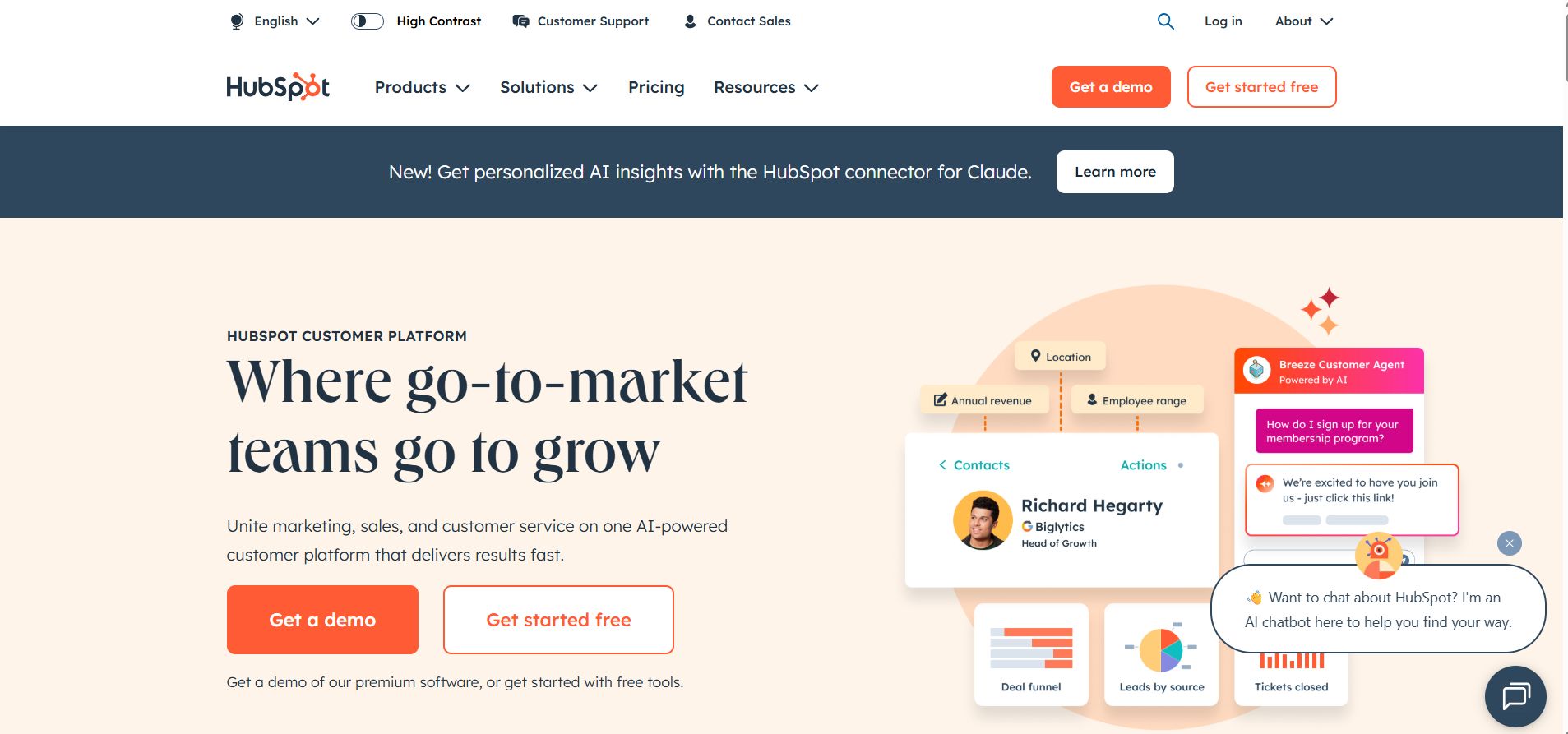
HubSpot CRM is widely regarded as one of the best CRM platforms for small businesses due to its user-friendly interface, powerful automation capabilities, and scalable ecosystem. Founded in 2006, HubSpot has grown from an inbound marketing platform into a complete customer relationship management solution used by hundreds of thousands of businesses worldwide.
Unlike many CRM systems that focus only on sales management, HubSpot combines sales, marketing, customer service, content management, reporting, and AI-powered tools within a single platform. This makes it particularly attractive for London SMEs looking to reduce software costs while managing customer relationships more efficiently.
Whether you’re a startup, consultancy, agency, ecommerce business, or professional services firm, HubSpot provides the tools needed to attract leads, nurture prospects, close deals, and retain customers.
Company Overview
Key Features
- Contact Management
- Deal Pipeline Tracking
- Email Marketing
- Marketing Automation
- Live Chat & Chatbots
- Meeting Scheduling
- Sales Forecasting
- Reporting Dashboards
- Customer Service Tools
- AI-Powered Productivity Features
- Mobile CRM Access
- Workflow Automation
Latest 2025–2026 Features
Advantages
- ✔One of the best free CRM plans available
- ✔Easy to set up and use
- ✔Excellent marketing automation tools
- ✔Powerful reporting and analytics
- ✔Large integration marketplace
- ✔AI-powered productivity features
- ✔Extensive training resources
- ✔Strong global support network
Disadvantages
- ✖Professional plans can become expensive
- ✖Advanced automation requires upgrades
- ✖Marketing Hub pricing increases as contacts grow
- ✖Some reporting features are restricted to higher plans
Pricing
Customer Reviews
2. Zoho CRM – “Smart CRM, Smarter Business”
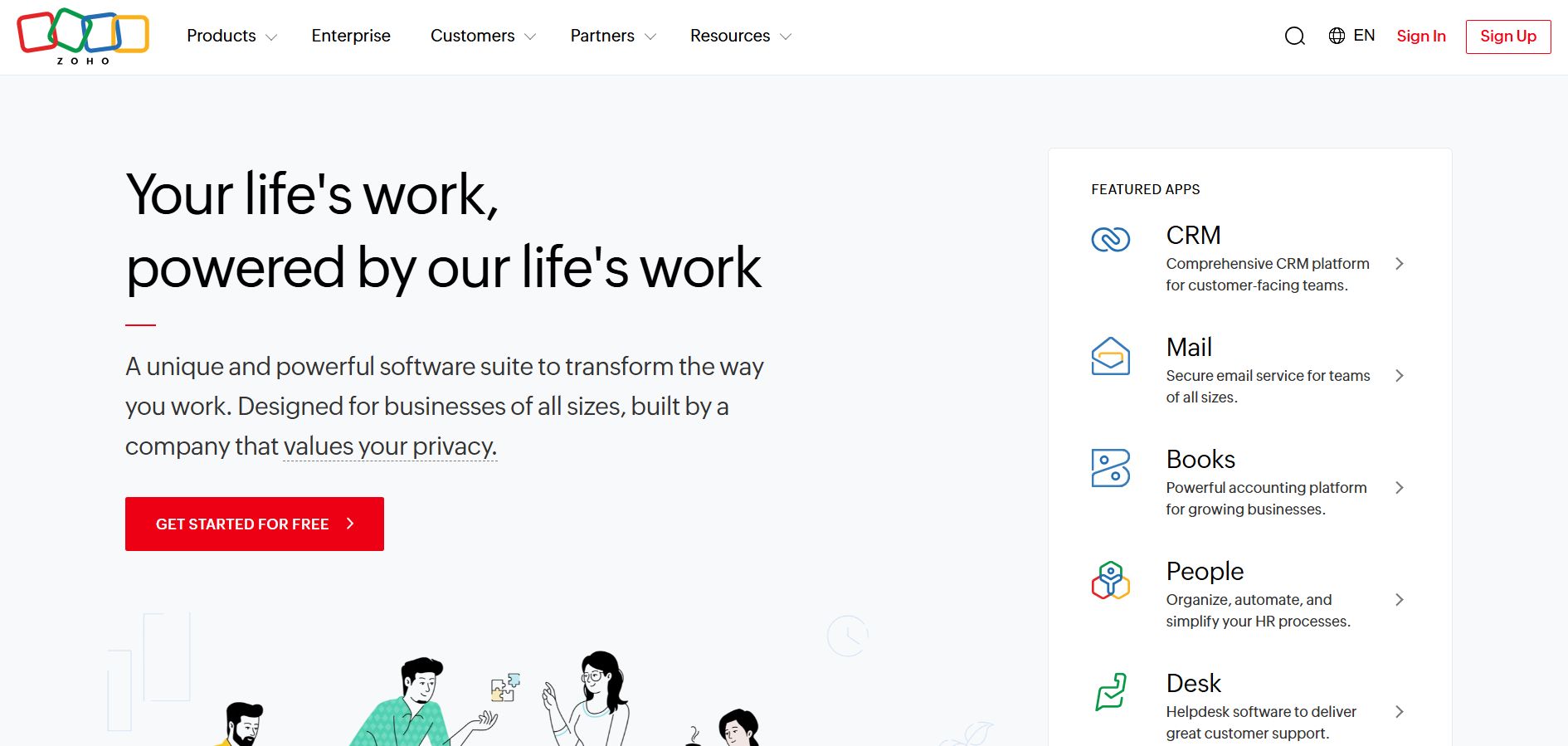
Zoho CRM is one of the most affordable and feature-rich CRM platforms available for small companies. Founded in 1996, Zoho has grown into a global software provider offering more than 50 business applications, including CRM, accounting, project management, email marketing, and customer support tools.
What makes Zoho CRM particularly attractive for London SMEs is its excellent balance between pricing and functionality. While many CRM providers charge premium prices for automation and AI capabilities, Zoho includes advanced features at a significantly lower cost.
Whether you’re running a startup, ecommerce store, consultancy, recruitment agency, or service-based business, Zoho CRM provides the tools needed to manage leads, automate sales processes, improve customer engagement, and support business growth.
Company Overview
Key Features
- Lead Management
- Contact Management
- Sales Pipeline Tracking
- Workflow Automation
- Email Marketing
- Sales Forecasting
- Customer Journey Tracking
- AI Assistant (Zia)
- Advanced Reporting
- Mobile CRM App
- Multi-Channel Communication
- Custom Dashboards
Latest 2025–2026 Features
Advantages
- ✔Excellent value for money
- ✔Affordable pricing for SMEs
- ✔Powerful AI assistant
- ✔Extensive customization options
- ✔Strong automation capabilities
- ✔Strong reporting functionality
- ✔Scalable for long-term growth
Disadvantages
- ✖Interface can feel overwhelming for beginners
- ✖Learning curve is higher than HubSpot
- ✖Customer support varies by plan
- ✖Advanced setup may require technical knowledge
Pricing
Customer Reviews
3. Pipedrive – Best CRM for Sales Teams
Pipedrive is a sales-focused CRM platform designed specifically to help businesses manage leads, track opportunities, and close more deals. Founded in 2010 by a group of experienced sales professionals, Pipedrive has become one of the most popular CRM solutions for small and medium-sized businesses worldwide.
Unlike many CRM platforms that attempt to combine sales, marketing, and customer service into one system, Pipedrive focuses heavily on sales pipeline management. Its visual drag-and-drop interface makes it incredibly easy for teams to track deals, monitor progress, and identify opportunities that require attention.
For London businesses that rely heavily on lead generation and sales performance, Pipedrive offers one of the most intuitive CRM experiences available.
Company Overview
Key Features
- Visual Sales Pipelines
- Lead Management
- Deal Tracking
- Sales Forecasting
- Email Integration
- Workflow Automation
- Activity Reminders
- Contact Management
- Revenue Reporting
- AI Sales Assistant
- Mobile CRM App
- Smart Lead Routing
Latest 2025–2026 Features
Advantages
- ✔Excellent sales pipeline management
- ✔Easy-to-use drag-and-drop interface
- ✔Strong automation tools
- ✔Excellent mobile application
- ✔High customer satisfaction ratings
- ✔Strong workflow automation
- ✔Affordable compared to enterprise CRMs
Disadvantages
- ✖No permanent free plan
- ✖Marketing tools are limited
- ✖Customer service features are basic
- ✖Advanced reporting requires higher-tier plans
Pricing
Customer Reviews
4. Freshsales – “AI for Smarter Selling”
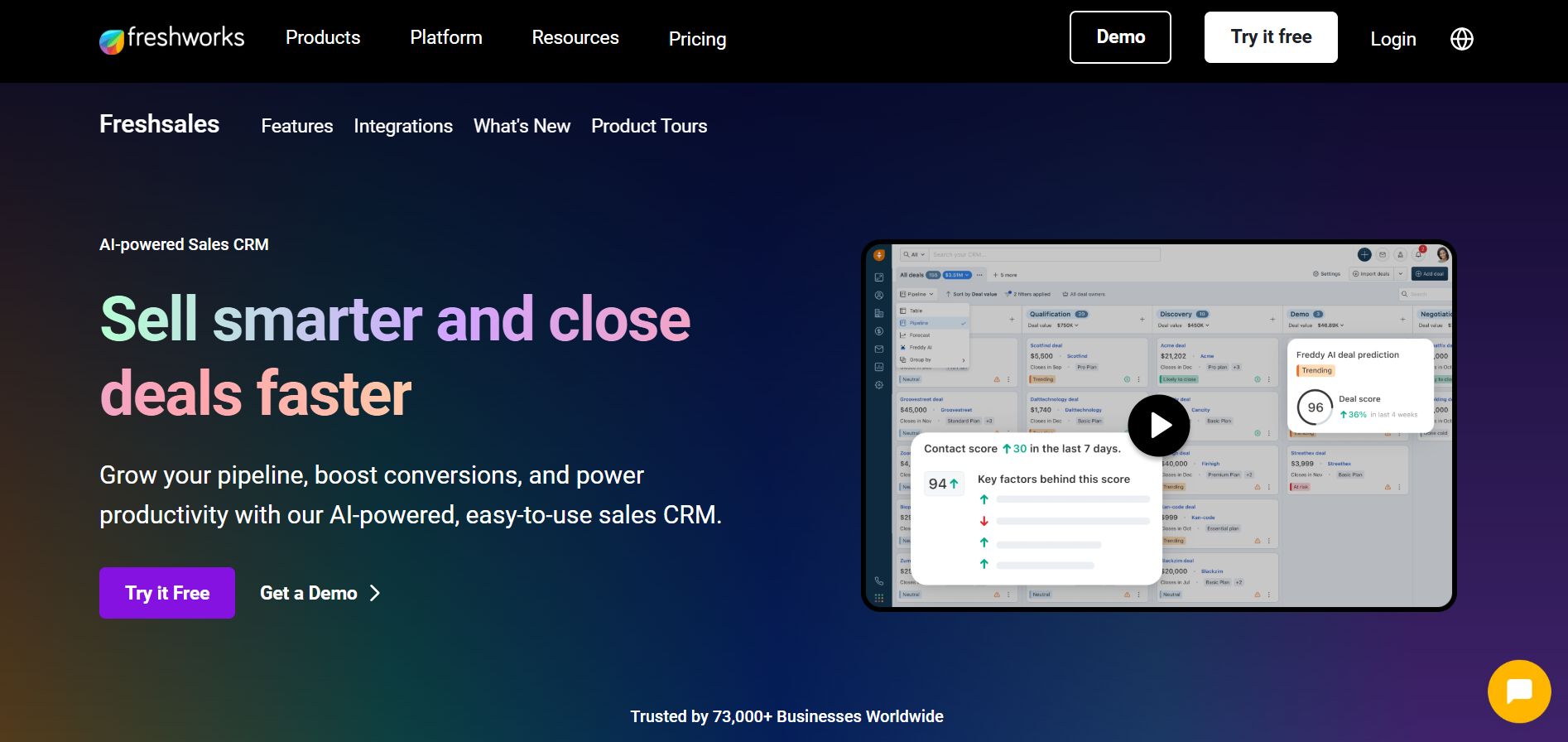
Freshsales is a modern CRM platform developed by Freshworks, a global software company known for creating business solutions that are easy to use and affordable for growing businesses. Launched in 2016, Freshsales has quickly become one of the leading AI-powered CRM platforms for startups, SMEs, and service-based companies.
What makes Freshsales stand out is its focus on automation and artificial intelligence. Unlike traditional CRM systems that require extensive manual data entry, Freshsales uses AI to help businesses identify sales opportunities, score leads, automate workflows, and improve customer engagement.
For small companies in London looking to increase productivity without expanding headcount, Freshsales offers an excellent balance of functionality, affordability, and AI-driven innovation.
Company Overview
Key Features
- Contact Management
- Lead Management
- AI Lead Scoring
- Built-in Telephony
- Email Tracking
- Sales Pipelines
- Workflow Automation
- Revenue Forecasting
- Customer Journey Tracking
- Sales Sequences
- Mobile CRM App
- Freddy AI Assistant
Latest 2025–2026 Features
Advantages
- ✔Affordable pricing
- ✔Excellent AI-powered features
- ✔Built-in phone system
- ✔Strong workflow automation
- ✔Easy implementation
- ✔Good mobile application
Disadvantages
- ✖Limited advanced reporting
- ✖Smaller integration marketplace
- ✖Trustpilot rating is relatively low
- ✖Some advanced features require upgrades
Pricing
Customer Reviews
5. Capsule CRM – Best CRM for UK Small Businesses
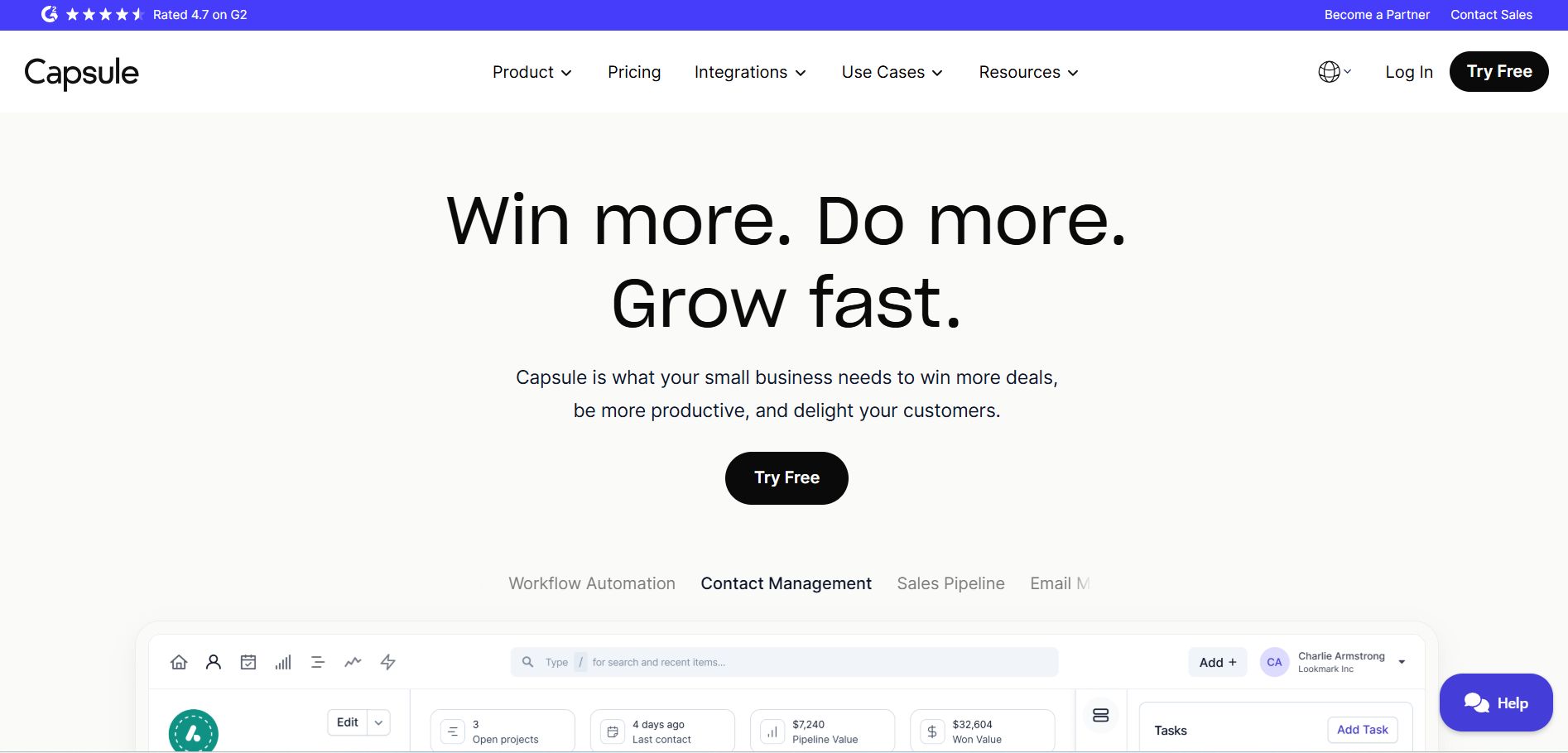
Capsule CRM is one of the few leading CRM platforms developed specifically with small businesses in mind. Founded in 2009 and headquartered in Manchester, UK, Capsule has built a strong reputation among consultants, accountants, agencies, freelancers, and professional service firms looking for a simple yet powerful customer management solution.
Unlike larger CRM platforms that can feel overwhelming, Capsule focuses on providing the essential tools businesses need to manage contacts, sales opportunities, tasks, and customer relationships without unnecessary complexity.
For London SMEs, Capsule offers a particularly attractive option thanks to its user-friendly interface, affordable pricing, strong GDPR compliance, and excellent integrations with popular accounting software such as Xero and QuickBooks.
Company Overview
Key Features
- Contact Management
- Sales Pipeline Tracking
- Task Management
- Opportunity Management
- Project Tracking
- Email Integration
- Workflow Automation
- Customer Activity Timeline
- Sales Reporting
- Mobile CRM App
- Xero Integration
- QuickBooks Integration
Latest 2025–2026 Features
Advantages
- ✔UK-based CRM provider
- ✔Simple and easy-to-use interface
- ✔Excellent for small businesses
- ✔Strong Xero and QuickBooks integrations
- ✔Affordable pricing
- ✔GDPR-friendly platform
- ✔Excellent customer support
Disadvantages
- ✖Limited marketing automation
- ✖Fewer AI features than competitors
- ✖Basic reporting compared to larger CRMs
- ✖Not ideal for enterprise organisations
Pricing
Customer Reviews
6. Monday.com CRM – “More Than Just a CRM”
Monday CRM is a flexible customer relationship management platform built on the popular Monday.com Work OS. Founded in 2012 and headquartered in Tel Aviv, Israel, Monday has grown rapidly and is now used by thousands of businesses worldwide for sales management, project tracking, customer onboarding, and workflow automation.
Unlike traditional CRM software that focuses solely on customer management, Monday CRM combines CRM functionality with project management and team collaboration tools. This makes it particularly attractive for startups, agencies, software companies, and project-based businesses that need to manage both customers and internal operations from a single platform.
For small companies in London, Monday CRM offers a highly visual and customisable solution that can adapt to different business processes without requiring technical expertise.
Company Overview
Key Features
- Contact Management
- Sales Pipeline Tracking
- Lead Management
- Workflow Automation
- Project Management
- Team Collaboration
- Customer Onboarding
- Task Management
- Reporting Dashboards
- AI Assistant
- Mobile CRM App
- Revenue Forecasting
Latest 2025–2026 Features
Pros & Cons
Advantages
- ✔Highly visual interface
- ✔Excellent project management tools
- ✔Strong workflow automation
- ✔Easy customisation
- ✔Excellent team collaboration features
- ✔Good mobile application
Disadvantages
- ✖No permanent free plan
- ✖Some advanced features require higher-tier plans
- ✖Can become expensive as teams grow
- ✖CRM functionality is less sales-focused than Pipedrive
Pricing
Customer Reviews
8. Copper CRM – Best CRM for Google Workspace Users
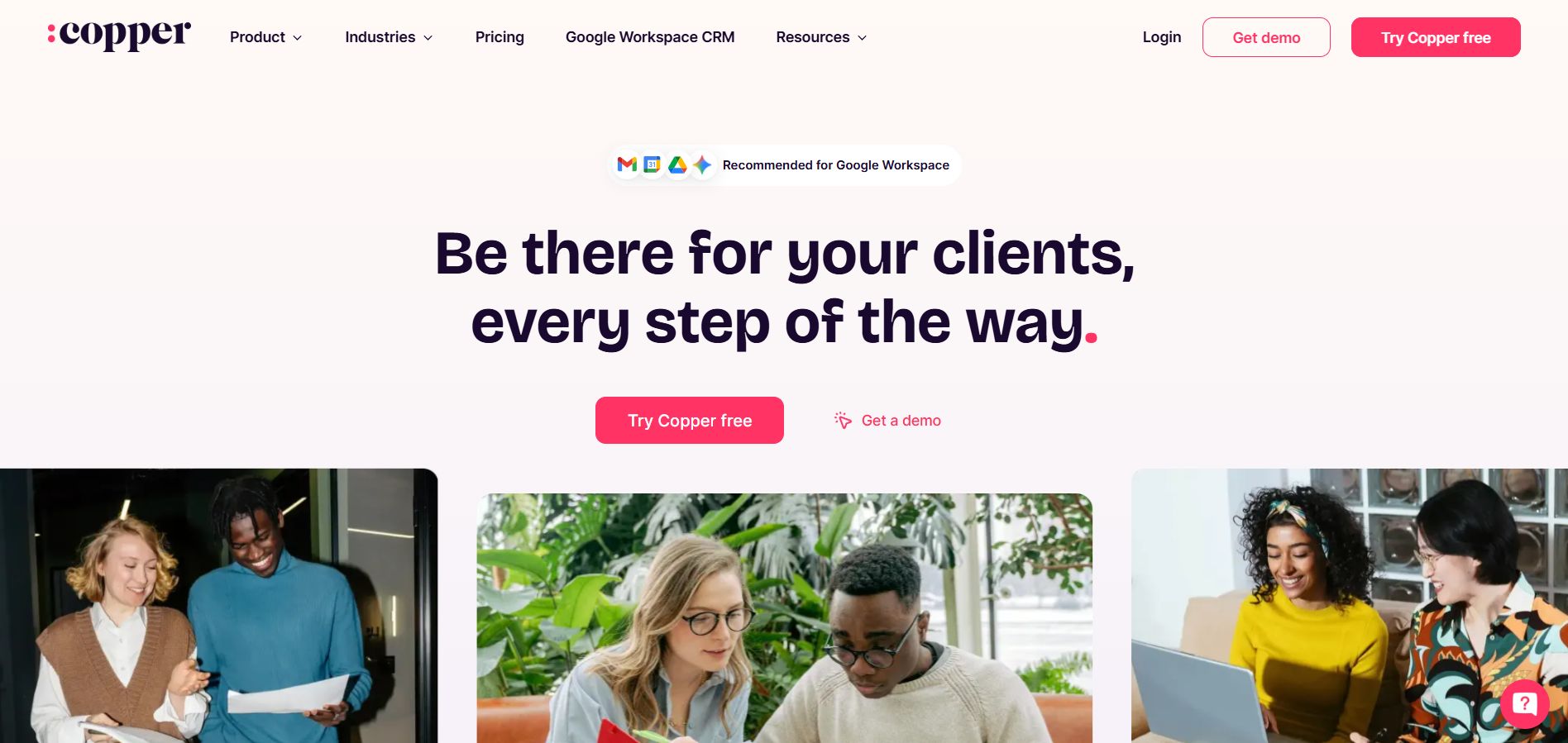
Copper CRM is a customer relationship management platform built specifically for businesses that use Google Workspace. Founded in 2012 and headquartered in San Francisco, California, Copper has become a popular CRM solution for startups, consultants, agencies, and small businesses that rely heavily on Gmail, Google Calendar, and Google Drive.
Unlike traditional CRM systems that require users to switch between multiple applications, Copper works directly inside Google’s ecosystem. This seamless integration reduces manual data entry, improves productivity, and helps teams manage customer relationships without leaving their inbox.
For small companies in London already using Google Workspace, Copper offers one of the most intuitive CRM experiences available.
Company Overview
Key Features
- Gmail Integration
- Google Calendar Integration
- Contact Management
- Lead Management
- Sales Pipeline Tracking
- Workflow Automation
- Task Management
- Email Tracking
- Activity Tracking
- Reporting Dashboards
- Mobile CRM App
- Google Drive Integration
Latest 2025–2026 Features
Advantages
- ✔Excellent Google Workspace integration
- ✔Minimal manual data entry
- ✔Easy-to-use interface
- ✔Strong workflow automation
- ✔Excellent Gmail experience
- ✔Strong customer relationship tracking
- ✔Easy employee adoption
Disadvantages
- ✖No free plan available
- ✖More expensive than some competitors
- ✖Limited Microsoft 365 compatibility
- ✖Fewer marketing features than HubSpot
Pricing
Customer Reviews
9. Insightly – Best CRM for Agencies and Project-Based Businesses
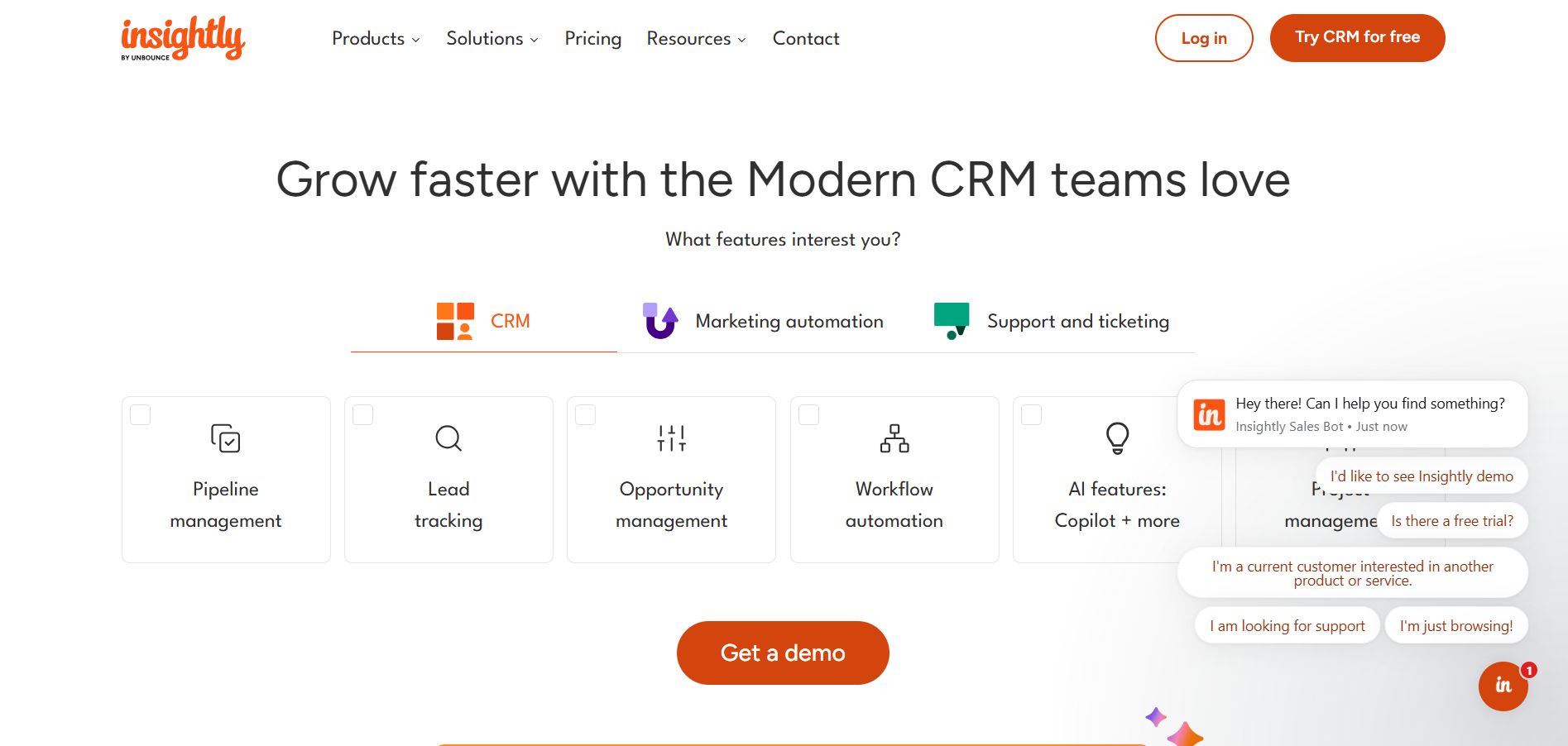
Insightly is a CRM platform designed to help businesses manage customer relationships, sales pipelines, and project delivery from a single system. Founded in 2009, Insightly has become particularly popular among agencies, consultancies, construction firms, and service-based businesses that need both CRM and project management functionality.
Unlike many traditional CRM platforms that stop at the point of sale, Insightly allows businesses to continue managing client projects, tasks, and workflows after a deal has been won. This makes it an attractive solution for companies handling long-term customer relationships and project-based work.
For London businesses that need to manage both sales opportunities and client projects efficiently, Insightly offers a powerful all-in-one solution.
Company Overview
Key Features
- Contact Management
- Lead Management
- Opportunity Tracking
- Project Management
- Workflow Automation
- Email Marketing
- Customer Relationship Tracking
- Task Management
- Reporting Dashboards
- Mobile CRM App
- Customer Journey Management
- Sales Forecasting
Latest 2025–2026 Features
Advantages
- ✔CRM and project management in one platform
- ✔Excellent project tracking tools
- ✔Suitable for agencies and consultancies
- ✔Easy customer lifecycle management
- ✔Good Google Workspace integration
- ✔Strong task management features
Disadvantages
- ✖Interface feels dated compared to competitors
- ✖Higher pricing than some alternatives
- ✖Learning curve for new users
- ✖Limited marketing features compared to HubSpot
Pricing
Customer Reviews
10. Nutshell CRM – “Simple Sales Success”
Nutshell CRM is a sales-focused customer relationship management platform designed specifically for small and medium-sized businesses. Founded in 2009 and headquartered in Ann Arbor, Michigan, Nutshell has built a strong reputation for providing a simple yet powerful CRM solution that helps businesses manage leads, track sales opportunities, and improve customer relationships without unnecessary complexity.
Unlike some CRM platforms that require extensive training and setup, Nutshell focuses on delivering an intuitive user experience. This makes it particularly attractive for small companies that want to start managing customer relationships quickly without investing significant time in implementation.
For London SMEs seeking an affordable, easy-to-use CRM with strong sales functionality, Nutshell remains one of the most practical options available.
Company Overview
Key Features
- Contact Management
- Lead Management
- Sales Pipeline Tracking
- Email Marketing
- Sales Automation
- Workflow Automation
- Team Collaboration
- Activity Tracking
- Reporting Dashboards
- Mobile CRM App
- Web Forms
- Revenue Forecasting
Latest 2025–2026 Features
Pros & Cons
Advantages
- ✔Simple and easy-to-use interface
- ✔Fast implementation process
- ✔Strong sales automation features
- ✔Unlimited contacts and data storage
- ✔Excellent customer satisfaction ratings
- ✔Strong team collaboration features
Disadvantages
- ✖No permanent free plan
- ✖Limited marketing automation
- ✖Fewer integrations than larger CRM platforms
- ✖Advanced customisation options are limited
Pricing
Customer Reviews
Which CRM Software Is Best for Different Types of Small Companies?
How Much Does CRM Software Cost for Small Companies?
One of the biggest concerns for small business owners is CRM pricing. While CRM platforms are often viewed as expensive enterprise tools, the reality is that many modern solutions are affordable and designed specifically for SMEs.
The total cost depends on several factors, including:
- Number of users
- Required features
- Automation requirements
- Marketing functionality
- Customer support needs
- Reporting capabilities
- Third-party integrations
Typical CRM Costs for Small Businesses
Many businesses start with free CRM plans and upgrade as customer databases and operational requirements grow.
Hidden CRM Costs to Consider
When comparing CRM platforms, don’t focus solely on subscription prices.
Additional costs may include:
- User licences
- Data migration
- Staff training
- CRM consultants
- Premium support
- Additional storage
- Marketing automation upgrades
For example, HubSpot’s free plan is highly attractive initially, but businesses should understand the pricing increases that occur when upgrading to Professional plans.
Similarly, Salesforce provides exceptional scalability, but implementation and customisation costs can increase significantly over time.
Conclusion
Customer Relationship Management software has become one of the most important investments a small business can make.
In London’s competitive business environment, managing customer relationships effectively can directly influence revenue growth, customer retention, and operational efficiency.
While every CRM platform featured in this guide offers unique strengths, HubSpot CRM remains the strongest overall option for most small businesses due to its balance of usability, functionality, automation, and scalability.
Businesses focused on affordability may prefer Zoho CRM, while sales-driven organisations should strongly consider Pipedrive. Companies seeking UK-focused support will appreciate Capsule CRM, and startups requiring flexibility may find Monday CRM particularly attractive.
Ultimately, the best CRM software is the one that aligns with your business goals, processes, and growth plans. By investing in the right platform today, small companies can build stronger customer relationships, improve productivity, and position themselves for long-term success in 2026 and beyond.
FAQs
What is CRM software?
CRM software helps businesses manage customer information, sales activities, communication history, and customer relationships from a single platform.
Is CRM software worth it for small companies?
Yes. CRM software improves organisation, increases productivity, enhances customer retention, and helps businesses scale more efficiently.
What is the easiest CRM for beginners?
Capsule CRM and Pipedrive are widely regarded as two of the easiest CRM platforms to learn and implement.
Which CRM has the best free plan?
HubSpot CRM offers one of the most comprehensive free CRM plans available.
Which CRM is best for startups?
Monday CRM, HubSpot CRM, and Zoho CRM are excellent options for startups due to their flexibility and affordability.
Which CRM is best for consultants?
Capsule CRM is particularly popular among consultants because of its simplicity and integration with accounting software.
Which CRM is best for sales teams?
Pipedrive remains one of the strongest choices for businesses focused on sales performance.
Can CRM software automate follow-ups?
Yes. Most modern CRM platforms can automatically send emails, schedule reminders, assign tasks, and manage customer journeys.
Is CRM software GDPR compliant?
Most leading CRM providers support GDPR compliance through consent tracking, secure storage, and data management tools.
Can CRM software integrate with accounting systems?
Yes. Many CRM platforms integrate with Xero, QuickBooks, Sage, and other accounting solutions.